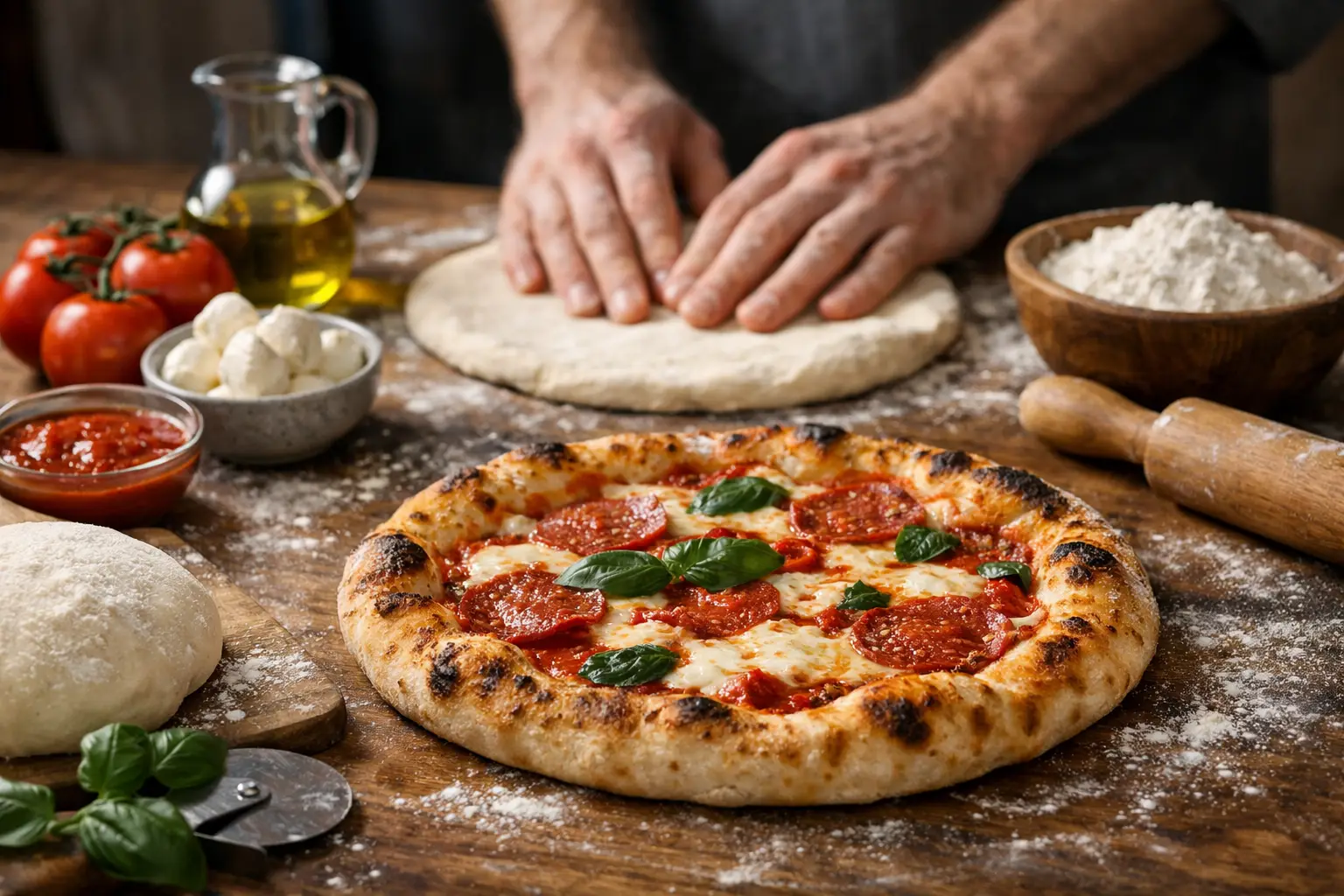
You can tell a lot about a pizza before the first bite. Look at the rim. If the edge has a little lift, some blistering, and a color that runs from golden to deep brown, you’re probably dealing with more than a rushed, factory-style shell. This guide to handcrafted pizza crust gets into what makes a crust worth craving – not just what it tastes like, but why it tastes that way.
A good crust does more than hold toppings together. It sets the pace for the whole pie. It gives you chew, crispness, structure, and flavor in one shot. When a pizza starts with fresh dough made daily, every other ingredient has a better place to land.
What handcrafted pizza crust actually means
Handcrafted pizza crust is not just a nicer way to say pizza dough. It usually points to a process with more attention at every step: mixing, resting, fermenting, shaping, and baking. Instead of treating crust like a blank base, a handcrafted approach treats it like a major part of the meal.
That matters because dough changes over time. Flour hydrates. Yeast develops flavor. Gluten builds strength, then relaxes enough to shape. When that process is rushed, the crust can come out flat in more ways than one. It may still be edible, but it rarely has the depth, texture, or character people remember.
Handcrafted does not always mean one single style, either. A tavern-style pie, a thicker pan pie, and a chewy New York-inspired crust can all be handcrafted if the dough is made with care and baked with purpose. The point is not chasing a buzzword. The point is flavor and feel.
The foundation of a guide to handcrafted pizza crust
Every crust starts with a short list of ingredients, but small changes create big differences. Flour is the backbone. Water wakes everything up. Yeast drives fermentation. Salt adds flavor and controls the dough. Oil, if used, can affect tenderness, browning, and overall bite.
Flour choice has a major impact. Higher-protein flour tends to create more chew and structure. Lower-protein flour can make for a softer, more delicate crust. Neither is automatically better. It depends on the kind of pizza you want to serve. A sturdier specialty pie with generous toppings may need more backbone than a simple cheese pizza with a light hand.
Hydration matters just as much. That is the ratio of water to flour, and it helps determine whether the dough bakes up airy, crisp, dense, or somewhere in between. Wetter dough can create a more open interior with bigger bubbles, but it is also trickier to handle. Drier dough is easier to manage and often works well for a thinner, firmer crust. There is always a trade-off between ease, texture, and bake.
Fermentation is where the flavor shows up
If there is one thing that separates a forgettable crust from one with real personality, it is time. Fermentation develops flavor in a way shortcuts cannot fake. A dough that has had time to rest and mature tends to taste fuller and bake more evenly.
Same-day dough can work, especially in busy kitchens, but longer fermentation often brings better results. A cold ferment gives yeast more time to work slowly, which can create subtle tang, better browning, and a more developed texture. That said, too long in the cooler can push dough past its peak. Over-fermented dough may turn slack, overly sour, or harder to shape cleanly.
That is why consistency matters. Fresh dough daily is not just about freshness on paper. It is about using dough at the right point, when it has enough development to taste great and enough strength to bake the way it should.
Shaping by hand changes the final bite
Machine-pressed dough and hand-shaped dough do not bake the same way. Pressing can flatten gas pockets and create a more uniform, sometimes tighter crumb. Hand-shaping helps preserve the air built during fermentation, which often leads to a lighter rim and better texture.
This is one of the clearest signs of a handcrafted crust. You may see slight variation from pie to pie. That is not a flaw. It is usually proof that someone worked the dough instead of forcing it into a one-size-fits-all result.
There is still technique involved. Handle dough too roughly and you lose the air. Handle it too gently and you may not get enough stretch or structure. The best crust lands in that middle ground – shaped with intention, not overworked.
Bake temperature, surface, and timing
A great dough can still become an average crust if the bake is off. Heat does a lot of the heavy lifting. It creates oven spring, sets the structure, browns the exterior, and melts toppings into the crust instead of leaving them disconnected from it.
Higher heat usually means faster rise and better blistering, but it also narrows the margin for error. Lower heat can offer more control, especially for heavily topped pizzas, though it may not produce the same dramatic char or lift. Again, it depends on style.
The baking surface matters too. Stone, steel, screens, and deck ovens all affect how the bottom crust cooks. A steel or hot deck can drive strong bottom heat for better crispness. A screen can help with airflow and consistency. None of these tools magically make pizza better on their own. They just shape the final result.
Timing is where a lot of pizzas win or lose. Pull it too early and the center may sag. Leave it too long and the crust dries out before the toppings stay balanced. A handcrafted pie should have contrast – crisp edge, tender interior, and enough structure to support the slice without turning stiff.
Texture is not one thing
People often talk about crust as if there is a single right answer, but most pizza fans want a mix of textures. A good handcrafted crust usually brings crispness on the outside, a little chew underneath, and enough interior softness to keep each bite satisfying.
That balance changes depending on toppings. A simple cheese pizza gives the crust more room to speak. A pie loaded with meats, pickles, chicken, pineapple, or extra sauce needs a crust with enough structure to stay in the game. The heavier the build, the more important the dough becomes.
This is where handcrafted crust earns its keep. It is not trying to disappear. It is built to complement the pie. On a specialty pizza, that matters even more because the crust is what keeps bold flavors from feeling messy or overloaded.
Why crust matters in a tavern setting
Pizza hits differently when it lands on the table next to cold drinks and a round of conversation. In a neighborhood tavern, crust has to do more than impress food people. It has to work for the whole experience. It should hold up through a slow meal, stay appealing from first slice to last, and pair naturally with everything from a crisp beer to a pour of bourbon.
That is part of why handcrafted crust fits so well in a place built around both food and hospitality. It feels more substantial. More deliberate. You can taste that somebody cared about the base, not just the toppings. At The Declaration Tavern, that kind of fresh-dough approach makes sense because it matches the rest of the experience – warm, local, and focused on flavor that feels worth coming back for.
A few signs you’re getting the real thing
If you want to spot a handcrafted pizza crust, pay attention before you even pick up the slice. Look for a rim with natural variation instead of a perfectly stamped edge. Check the underside for even browning rather than pale spots or a brittle, overcooked finish. Notice whether the slice folds a little without collapsing completely.
Then taste it on its own. Good crust should have flavor even without sauce or cheese. You should get a little salt, a little toastiness, maybe a faint tang from fermentation, and a texture that feels alive rather than processed.
Of course, different styles show those qualities in different ways. A thin tavern-style crust may lean snappier. A thicker hand-tossed pie may lean chewier. What matters is that the texture feels intentional and the flavor tastes developed, not rushed.
The best crust is built for the whole pizza
A lot of pizza talk gets stuck on one detail – airy crumb, crisp bottom, charred edge – as if that single feature defines quality. In practice, the best handcrafted crust is the one that makes the whole pizza better. It supports the sauce, complements the cheese, and gives every topping a better chance to shine.
That means there is room for preference. Some people want more crunch. Some want more chew. Some want a crust sturdy enough for a loaded specialty pie, while others want one that disappears under a classic pepperoni. The smart way to think about handcrafted crust is not perfection in the abstract. It is balance on the plate.
The next time a pizza really lands, take a second and pay attention to the crust. If it has flavor on its own, texture that keeps you reaching for another bite, and enough character to stand beside the toppings instead of hiding under them, that is the part worth remembering.
Leave a Reply