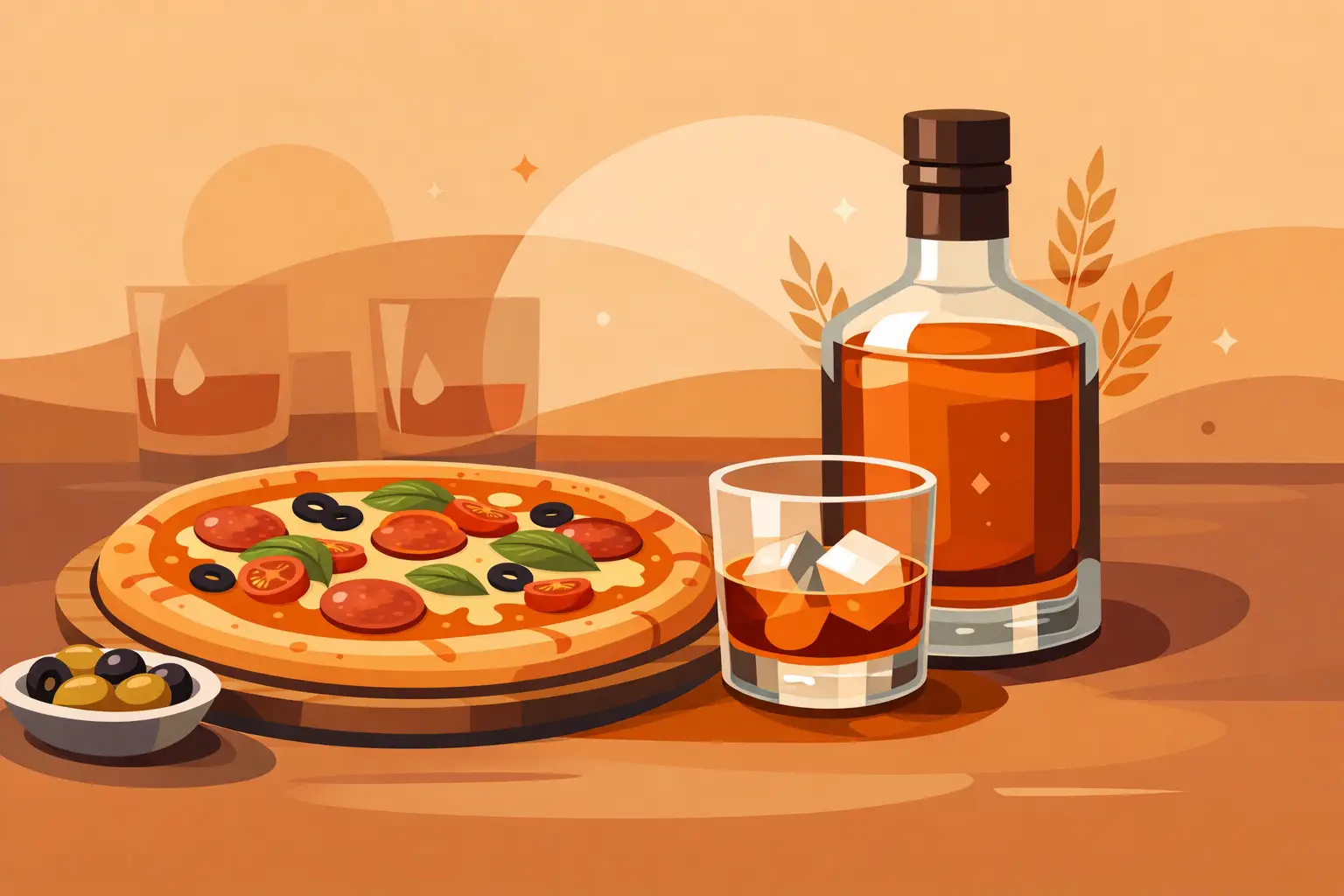
Friday night usually starts with one question – what pizza are we ordering? But if you care about what is in the glass too, bourbon and pizza pairing turns a casual meal into something a lot more satisfying without making it feel fussy.
Pizza has fat, salt, acid, spice, and char working all at once. Bourbon brings sweetness, oak, heat, and texture. When the match is right, the cheese tastes richer, the crust tastes toastier, and the toppings come through cleaner. When the match is off, the whiskey can bulldoze the food or the pizza can flatten the pour. That is why a good pairing is less about rules and more about balance.
How bourbon and pizza pairing actually works
The best place to start is with contrast. Bourbon is naturally sweet from the corn in the mash bill, and that sweetness can calm spicy sauce, jalapenos, buffalo chicken, or salty cured meats. At the same time, bourbon has enough structure to stand up to rich cheese and heavier toppings in a way that lighter drinks sometimes cannot.
But there is another side to it. Some pizzas want a bourbon that mirrors what is already on the plate. A pie with caramelized onions, sausage, and browned cheese can taste even better next to a bourbon with vanilla, baking spice, and toasted oak. A smoky finish can also play well with charred crust or roasted meat.
Proof matters more than people think. A high-proof bourbon can be great with a bold pizza, but it may run over a simple cheese slice. Lower-proof or softer wheated bourbons are often better with delicate pies, white sauces, or anything where you want the dough and cheese to stay front and center.
Temperature matters too. Bourbon served neat will show more aroma and depth, while a big cube can soften the heat and make it easier to pair with food. If your pizza has a lot going on, a little dilution is often a good thing.
Start with the pizza, not the bottle
If you are deciding between several pours, build from the pie first. Pizza is usually louder than bourbon in terms of salt, acid, and texture, so the toppings should guide the choice.
Cheese pizza is the easiest example. It sounds simple, but it has plenty happening – creamy mozzarella, bright tomato sauce, and a crust that can be chewy, crisp, or blistered. A balanced bourbon with vanilla, caramel, and light oak works well here because it adds warmth without stealing attention. You do not need the biggest bottle on the shelf. You need one that stays smooth through the middle and finishes clean.
Pepperoni asks for a little more backbone. The fat and spice in the meat want a bourbon with enough sweetness to round the edges but enough proof to keep the pairing lively. This is where classic bourbon notes like brown sugar, cherry, cinnamon, and char really shine. The pepperoni gets a little smokier, and the bourbon tastes fuller.
Sausage pizzas usually lean savory and herb-forward, especially when fennel or roasted peppers are involved. A bourbon with more oak and spice can be a strong fit, especially if the crust has a good bake on it. If the sausage is mild, keep the proof moderate. If it is hot Italian sausage, you can push bigger.
Pairing bourbon with white pies and richer toppings
White pizzas can be trickier than red sauce pies because they often have less acidity to cut through the bourbon. Ricotta, garlic, olive oil, and mozzarella create a softer, richer profile. That means the bourbon should be round and not too aggressive.
A wheated bourbon is often the move here. The softer texture and sweeter finish sit nicely with creamy cheese and roasted garlic. You get enough contrast to keep the palate awake, but not so much heat that the whole bite turns sharp.
The same idea works for chicken bacon ranch or other rich specialty pies. These pizzas are full-bodied already, so a bourbon with heavy oak and high proof can make the meal feel dense. A smoother, sweeter pour gives you balance instead of overload.
If mushrooms are part of the pie, earthy notes become important. Some bourbons have a nutty or deeper toasted quality that plays especially well with mushrooms, onions, and browned cheese. That kind of pairing feels more tavern than tasting room, which is exactly the point.
Spicy pizza needs the right kind of bourbon
Spicy pizza is where people often make the wrong call. They reach for the hottest, boldest bourbon they have, thinking big flavor should meet big flavor. Sometimes that works, but often it just amplifies the burn.
For buffalo chicken, hot honey, jalapeno, or anything with a real kick, a slightly sweeter bourbon usually performs better than an overly oaky one. Sweet corn character, caramel notes, and a softer finish help cool things down. If the bourbon is too tannic or too hot, the spice gets harsher and the pairing becomes tiring after a slice or two.
That does not mean you need a gentle pour every time. If the pizza has heat plus richness, like buffalo chicken with plenty of cheese, a mid-to-higher proof bourbon can still work. The key is making sure the whiskey brings sweetness along with strength.
A good example is a pie with spicy meat and pickled toppings. The acidity from the pickles can actually help the bourbon feel brighter, while the salt in the meat pulls out its sweeter notes. That kind of combination can sound unusual on paper and still taste great in the booth.
Specialty pies make bourbon and pizza pairing more fun
This is where things get interesting. Specialty pizzas are built on contrast already, so bourbon pairing can either sharpen those flavors or smooth them out.
Take a pizza with ham and pineapple. Some people want nothing to do with it, and some people order it every time. Either way, the sweet-savory mix can be excellent with bourbon. A bottle with vanilla, light oak, and a touch of baking spice brings the fruit into focus without making the whole meal taste sugary. If the pie includes bacon or another smoky element, even better.
Buffalo chicken is another natural pairing candidate because it has tang, heat, cheese, and usually a drizzle or two working together. Bourbon can calm the sauce and reinforce the roasted flavor of the chicken. Just avoid anything too dry on the finish.
Pickle-forward pizzas are a little different. They need a bourbon that does not fight the brine. A sweeter, balanced pour works better than one that leans bitter or heavily woody. The result is bright, salty, and surprisingly clean between bites.
At a place like The Declaration Tavern, where specialty pies and curated bourbons share equal billing, that kind of pairing is not a gimmick. It is simply another way to enjoy handcrafted food with the right drink next to it.
Neat, on the rocks, or in a cocktail?
If you really want to taste the pairing, neat bourbon gives you the clearest picture. You smell more, you notice the finish, and each sip shows what the pizza is doing to the whiskey. That said, neat is not always the best choice for every guest or every pie.
On the rocks is often the most food-friendly option. A little chill and dilution can tame the alcohol and make the bourbon easier to carry through a whole meal. If your pizza is spicy, salty, or especially rich, this is usually the safest bet.
A bourbon cocktail can work too, but it depends on the build. An Old Fashioned with too much sugar can feel heavy with pizza, while a drier, more spirit-forward version can hold up better. Anything overly citrusy or fizzy may pull attention away from the crust and toppings. If the goal is pairing, simpler is usually better.
A few easy calls for your next order
If you want a reliable starting point, match classic cheese or margherita-style pizza with a balanced, lower-proof bourbon. Go a little bolder with pepperoni or sausage. Choose a softer wheated pour for white pies, garlic-heavy pies, or ranch-based pizzas. For buffalo chicken or jalapeno-heavy options, look for sweetness before raw heat.
And if you are ordering for a table, variety helps. One classic bourbon and one softer, sweeter option will usually cover most pizzas better than a lineup of high-proof pours. Pairing should make the table happier, not turn into homework.
The best bourbon and pizza pairing is the one that makes you want another sip and another slice. Start with what is on the pie, keep the bourbon in balance, and let the flavors do the talking.
Leave a Reply