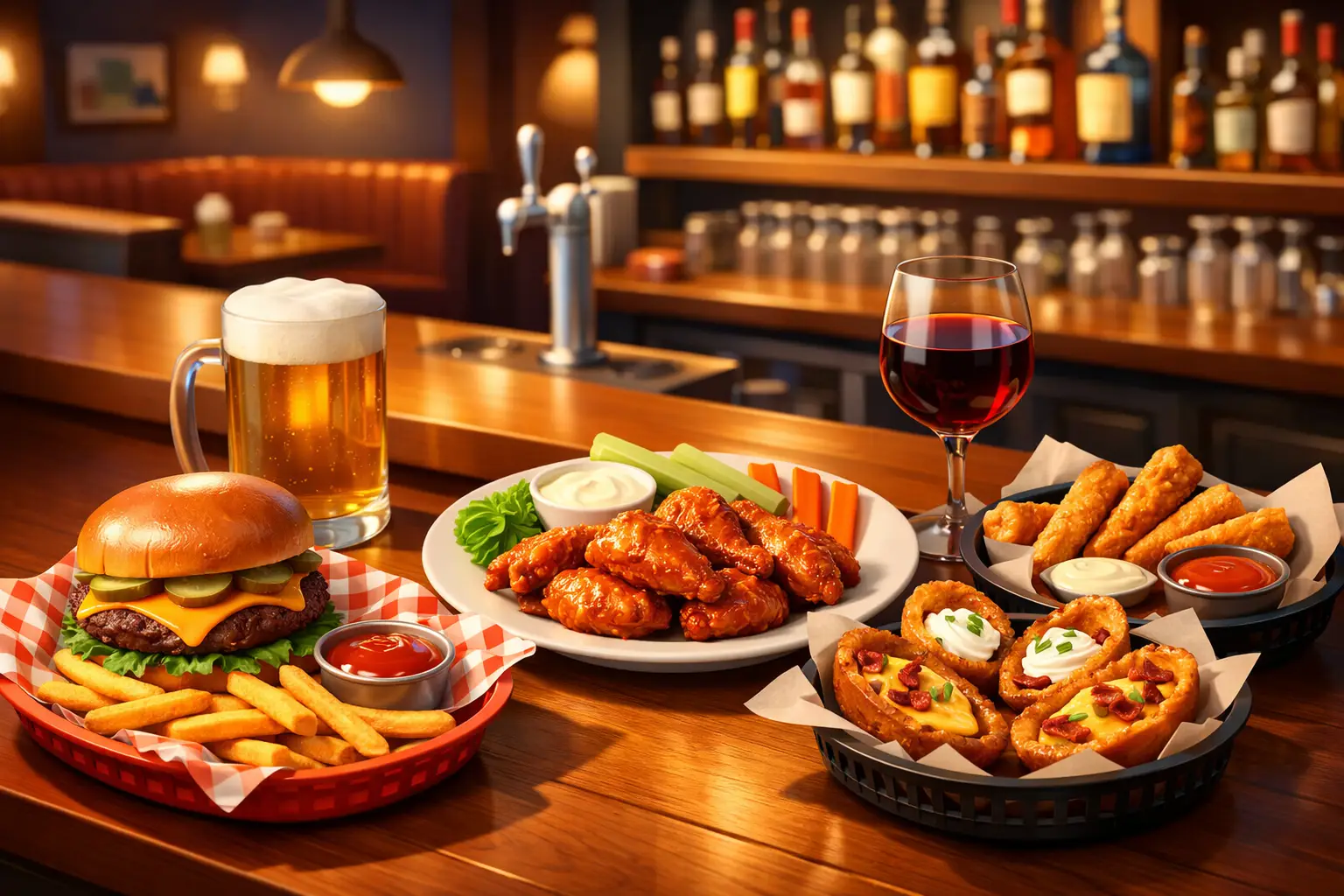
A good bar meal is not just something to eat with a drink. The best cozy neighborhood bar food gives people a reason to stay for another round, split one more app, and turn a quick stop into the kind of night that feels easy from the start. It hits that sweet spot between familiar and memorable – comforting enough for a weeknight, satisfying enough for a Friday out, and good enough that you think about it again the next day.
That is what separates a true neighborhood tavern from a place that only happens to have a bar. People want warmth, consistency, and food that feels made for the room they are sitting in. They want cold beer, a strong pour of bourbon, and something hot from the kitchen that feels a step above the usual frozen-fryer lineup.
What cozy neighborhood bar food should actually deliver
At its best, bar food is built around balance. You want richness, but not heaviness in every bite. You want food that pairs naturally with drinks, but still stands on its own if you are there for dinner. And you want options that work whether you are grabbing a quick meal alone, meeting friends after work, or bringing the family out on a weeknight.
That is why the category works best when it includes both comfort-food standards and a few house specialties. A great tavern menu usually starts with things people know they want – pizza, garlic knots, meatballs, wings, quesadillas, salads – then gives those staples more flavor, better ingredients, and more care than expected.
The trade-off is simple. If a menu chases novelty too hard, it can stop feeling approachable. If it plays everything too safe, it becomes forgettable. The sweet spot is food that feels familiar enough to order without overthinking, but good enough to feel like a step up from the average neighborhood stop.
Why pizza fits naturally into cozy neighborhood bar food
Pizza has always belonged in this conversation because it does two jobs at once. It is casual enough for the bar, but substantial enough for dinner. It works for groups, pairs easily with beer and bourbon, and can move from classic to creative without losing its appeal.
Fresh dough matters here more than people think. A pizza made from dough prepared daily has a different texture, chew, and character than something pulled from a freezer. It gives the pie structure without making it stiff, and it creates the kind of crust that holds up under sauce, cheese, and toppings without turning into a soggy afterthought.
Sauce matters too. A solid house red sauce can carry a classic pepperoni pie just as easily as it can support more distinctive combinations. That is where a neighborhood tavern can really stand out. You can keep one foot in tradition while giving guests something with a little personality, whether that means Buffalo chicken, a sweet-and-savory Hawaiian-style pie, or a combination bold enough to surprise people the first time they hear it and win them over by the second bite.
For a place like The Declaration Tavern, pizza makes sense because it brings together everything customers want from a local spot: handcrafted quality, easy sharing, and enough variety to satisfy the classic eater and the adventurous one at the same table.
The supporting cast matters as much as the main event
A lot of places focus so hard on the signature item that the rest of the menu feels like filler. That is where bar food can lose people. If the appetizers, salads, and side items are forgettable, the whole experience flattens out.
The strongest tavern menus treat those supporting dishes like part of the identity. Garlic knots should be warm, soft, and worth pulling apart at the table. Meatballs should feel saucy, savory, and substantial, not like an obligatory add-on. A good salad should not read like punishment for trying to eat lighter. It should bring crunch, freshness, and enough flavor to hold its own next to richer dishes.
This matters because people rarely order in a straight line at a neighborhood bar. One person wants pizza, another wants an app and a drink, someone else wants to keep it lighter, and the table usually wants at least one shareable in the middle. A menu that handles all of those moments well feels more generous and more useful. It becomes a place you can return to for different reasons, not just one craving.
Drinks are not separate from the food experience
In a true tavern, drinks are part of the point. They shape the pace of the meal, the feel of the room, and what people order. Cozy neighborhood bar food works best when the beverage side is treated with the same attention as the kitchen.
Cold beer will always have its place, especially with pizza, salty appetizers, and fried snacks. But a curated bourbon selection gives the bar a little more identity. It tells guests this is not just a place to eat near a bar. It is a place where the bar itself matters.
That does not mean the atmosphere has to feel exclusive or overly serious. In fact, the opposite is usually true. A well-built bourbon list in an approachable neighborhood setting can make the experience feel more welcoming, not less, because it gives regulars something to explore without changing the casual tone of the room.
There is also a practical side to this. When drinks and food are designed to work together, guests stay longer, order more naturally, and enjoy the experience more fully. A spicy pie with a cold draft, meatballs with a pour of bourbon, garlic knots with a round for the table – these combinations are simple, but they shape how memorable a night feels.
What people really want from a neighborhood spot
Most guests are not chasing a big production on a Tuesday night. They want a place that feels dependable without being boring. They want food that tastes like somebody cared about making it, a room that feels relaxed, and service that gets the tone right.
That tone matters more than trends. People will forgive a shorter menu if the kitchen does it well. They will come back for a familiar booth, a favorite pie, and the sense that the place understands what a neighborhood restaurant is supposed to be.
That can look different depending on the table. For a couple, it might mean splitting a specialty pizza and a couple of bourbons. For a family, it might mean a reliable dinner where everyone finds something they want. For a group of friends, it might mean appetizers, drinks, and a few pizzas in the middle while the conversation stretches out.
The common thread is comfort with standards. Not just comfort in the food, but comfort in the whole experience.
Cozy neighborhood bar food has to be consistent
People talk a lot about creativity in restaurants, but consistency is what makes a local place part of someone’s routine. If the crust is great one week and off the next, or if the service swings wildly depending on the night, guests notice. Neighborhood loyalty is earned through repeatable quality.
That does not mean every visit has to feel identical. Seasonal features, rotating drinks, and house specialties can keep things interesting. But the foundation should always feel steady. The room should still feel welcoming. The pizza should still have that fresh-dough bite. The appetizers should still come out hot, generous, and ready to share.
This is one reason cozy neighborhood bar food continues to matter, even when dining trends keep shifting. It is built around habits people actually have. Weeknight takeout. Last-minute dinner plans. Meeting up after work. Watching the game with something better than standard pub fare. Feeding a small group without making it complicated.
A place that can serve all of those occasions well becomes more than convenient. It becomes useful in the best way.
Why this style of food keeps people coming back
Comfort food gets remembered when it also has character. That is the difference. Plenty of places can offer something hot, cheesy, crispy, or filling. Not every place makes those things feel specific to the room, the neighborhood, and the people who come in regularly.
That is why cozy neighborhood bar food still wins. It understands that great local dining is not about showing off. It is about getting the details right – fresh dough, a solid sauce, a shareable starter you always want on the table, a drink list with some personality, and an atmosphere that makes staying awhile feel natural.
When a tavern can deliver that consistently, it becomes the kind of place people recommend without needing a special occasion. And that is usually the strongest sign you have found the right neighborhood spot: it fits just as well on an ordinary night as it does on one worth celebrating.
If you are choosing where to eat, start with the places that make comfort feel intentional. Those are the meals, and the rooms, people come back to.
Leave a Reply