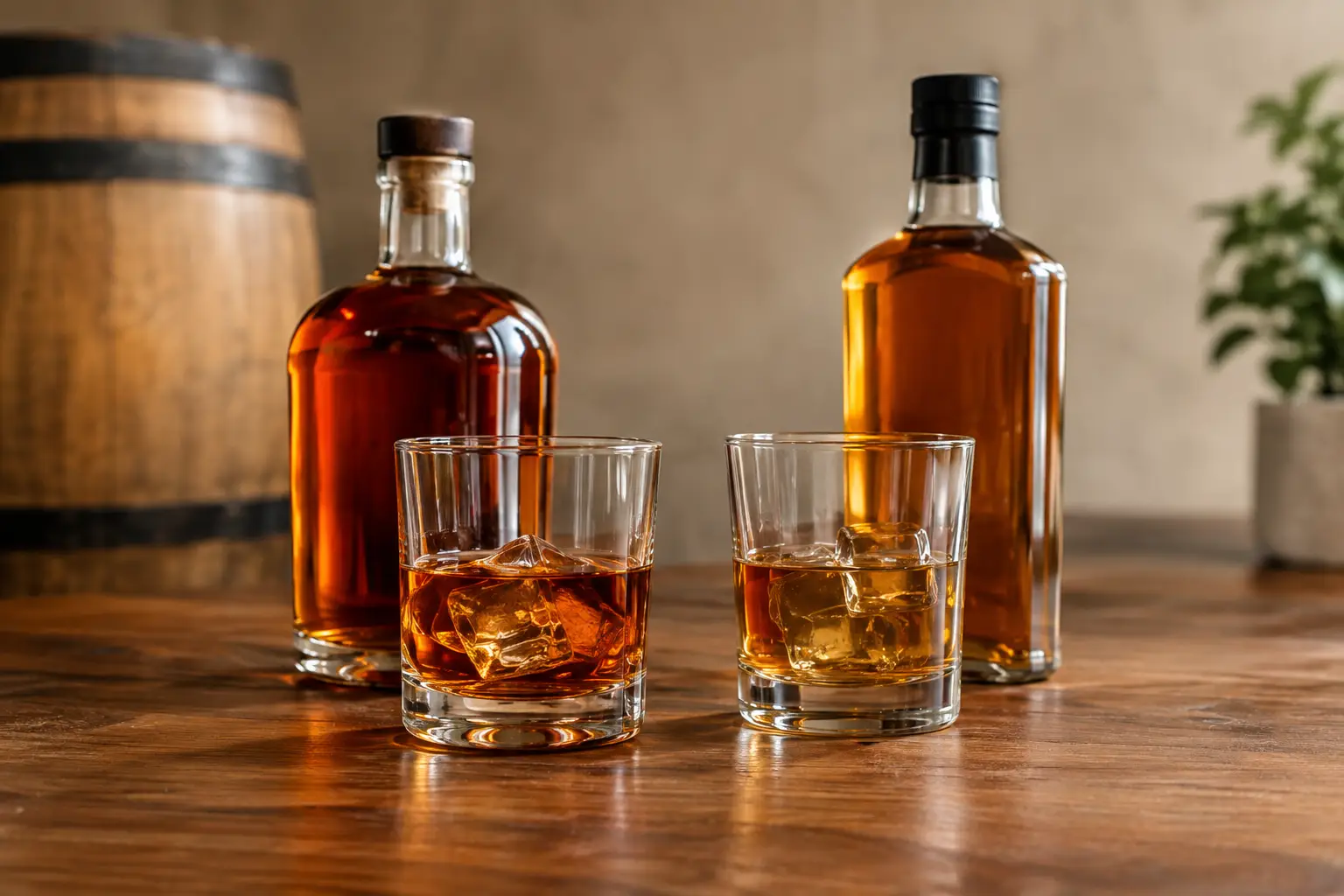
The bottle shelf can feel like a pop quiz when you are ordering a drink with friends. Rye, Tennessee whiskey, small batch, bottled-in-bond, Kentucky straight bourbon – it is a lot of words for someone who simply wants a good pour with dinner. The good news for bourbon vs whiskey beginners is simple: bourbon is whiskey, but whiskey is not always bourbon.
You do not need to memorize every distillery or learn to spot a rare bottle to enjoy it. Start with the basic rules, pay attention to flavors you already like, and order in a way that lets you taste the spirit without making the night feel like homework.
Bourbon vs Whiskey Beginners: The Fast Answer
Whiskey is a broad category of distilled spirits made from grain, aged in barrels, and bottled at a range of strengths. Bourbon is a specific kind of American whiskey with a tighter set of production rules.
To be called bourbon, it must be made in the United States, contain at least 51% corn in its grain recipe, and age in new charred oak barrels. It cannot contain added flavoring or coloring. Contrary to a common barstool myth, bourbon does not have to come from Kentucky. Kentucky makes a great deal of it, but bourbon can be produced anywhere in the country as long as it follows the rules.
That corn-forward recipe and fresh charred oak are why bourbon often tastes round, sweet, and familiar. Many first-time drinkers notice notes that resemble vanilla, caramel, toasted sugar, baking spice, roasted nuts, or oak. Those flavors are not necessarily added. They develop through the grains, fermentation, distillation, and barrel aging.
Whiskey, meanwhile, can be made in the United States, Ireland, Scotland, Canada, Japan, and many other places. The grains, barrel requirements, aging methods, and flavor profiles change by style. Scotch can be smoky or malty. Irish whiskey may feel lighter and fruitier. Rye whiskey tends to bring spice. Tennessee whiskey often shares bourbon’s corn-rich foundation but is filtered through charcoal before aging, creating its own style.
The Grains Change the Glass
A whiskey’s grain recipe, often called its mash bill, gives you a useful clue before the first sip. You do not need the exact percentages. Knowing the main grain is enough to point you in the right direction.
Corn makes bourbon feel softer
Because bourbon must use at least 51% corn, it often carries a natural sweetness and fuller texture. That makes it a comfortable starting point for people who enjoy cola, caramel desserts, toasted bread, or rich barbecue flavors. A classic bourbon can be a good choice if you want something relaxed and easygoing next to a pizza with savory toppings.
Some bourbons use more corn than others. These can lean sweeter and gentler. Others bring in more rye or malted barley, which can make the finish drier, spicier, or more grain-forward. Two bourbons can both be excellent and still taste noticeably different.
Rye brings pepper and spice
Rye whiskey uses rye grain as its leading ingredient. In the United States, rye whiskey must contain at least 51% rye. Expect more black pepper, clove, baking spice, dry grain, and sometimes a crisp herbal edge.
If bourbon feels like caramel corn and toasted oak, rye may feel more like rye bread, orange peel, and peppery spice. That profile works especially well in classic cocktails, but it can also be a rewarding neat pour for someone who wants less sweetness. It is not automatically harsher than bourbon. It is simply built differently.
Wheat can make bourbon gentler
Some bourbons replace the usual rye component with wheat. These are often called wheated bourbons. Wheat can soften the spice and make room for flavors like honey, bread dough, vanilla, and butterscotch.
For a new bourbon drinker, a wheated bourbon is often worth trying if regular bourbon seems too sharp or dry. It is not a guarantee that every wheated bottle will be sweet, but it is a useful direction to explore.
What Barrel Aging Actually Adds
Fresh charred oak barrels are one of bourbon’s defining features. The charred interior helps create the color and much of the flavor people associate with bourbon. As the spirit moves in and out of the wood during temperature changes, it pulls out compounds that can taste like vanilla, caramel, coconut, toast, and warm spice.
More age does not always mean better for every palate. An older bourbon may offer deeper oak, leather, dried fruit, and tannin, but it can also taste woodier and drier. A younger bourbon can be brighter, sweeter, and easier to sip. For beginners, the best bottle is usually not the oldest or most expensive one. It is the one whose flavor suits the way you want to drink it.
Proof matters, too. Proof is simply twice the alcohol by volume. A 90-proof whiskey is 45% alcohol by volume. Higher-proof pours can carry bigger aromas and richer flavor, but they also bring more heat. There is no prize for ordering the strongest option on the shelf. A lower- or mid-proof bourbon may give you a clearer first impression of what you enjoy.
How to Order Your First Bourbon
The right serve depends on your comfort level, the bottle, and the setting. A neat pour means bourbon served by itself in a glass. This gives you the most direct look at its aroma and flavor, but it can feel intense if you are new to spirits.
On the rocks means poured over ice. The ice chills the drink and gradually adds water as it melts, which can soften alcohol heat. This is a smart, no-pressure choice when you want to sip slowly through a meal. If you prefer a colder drink from the first sip, ask for it over ice.
A splash of water is another perfectly good option. A few drops or a small splash can open the aroma and make a higher-proof bourbon easier to taste. It does not ruin the whiskey. Neither does ordering bourbon with ginger ale, cola, or in an Old Fashioned. Drink the way you enjoy it.
For a first cocktail, an Old Fashioned is a solid introduction because bourbon remains front and center with a little sugar and bitters. A whiskey sour can be friendlier if you prefer brightness and citrus. A Manhattan is more spirit-forward and rye-driven, making it a good next step once you know you like whiskey’s spice.
Pair Bourbon With the Food, Not a Rulebook
Bourbon and pizza work because both bring richness, warmth, and plenty of room for contrast. A sweeter, oak-forward bourbon can stand up to salty pepperoni, melted cheese, and house red sauce. Its caramel and vanilla notes can also make a spicy pie feel more balanced.
With Buffalo Chicken pizza or any heat-forward dish, try bourbon over ice or a whiskey sour. The chill and citrus can refresh your palate between bites. With a smoky, savory meatball appetizer or garlic knots, a rye whiskey can add a welcome peppery edge. For a sweeter specialty pie, a classic bourbon neat or with one large cube may keep the pairing from becoming too sugary.
There is no fixed pairing chart that knows your taste better than you do. If a bold rye makes your pepperoni pizza more interesting, that is the right pour. If a mellow bourbon and a cold beer are more your speed, that works just as well.
A Simple Way to Taste Without Overthinking It
Take a small sip first. Let it sit on your tongue for a moment, then swallow. The first taste may seem warm or sharp, especially if you mostly drink beer, wine, or cocktails. Give it a second sip before deciding. Your palate adjusts quickly.
Notice three things: whether it tastes sweet, spicy, or oaky; whether it feels light or rich; and whether the finish fades quickly or lingers. You do not need to announce notes of antique saddle leather or summer orchard fruit. “I like the vanilla sweetness but not the peppery finish” is a useful tasting note.
If you are choosing from a curated bourbon selection, tell the bartender what you usually drink. Someone who likes a crisp lager, a citrus cocktail, or a dark roast beer may each land in a different place. A good neighborhood tavern should make that conversation easy, not intimidating.
At The Declaration Tavern, bourbon belongs in the same relaxed evening as fresh-dough pizza and cold drinks. Start with a pour that sounds good, take your time with it, and let the next bite help you decide what to try next.
Leave a Reply