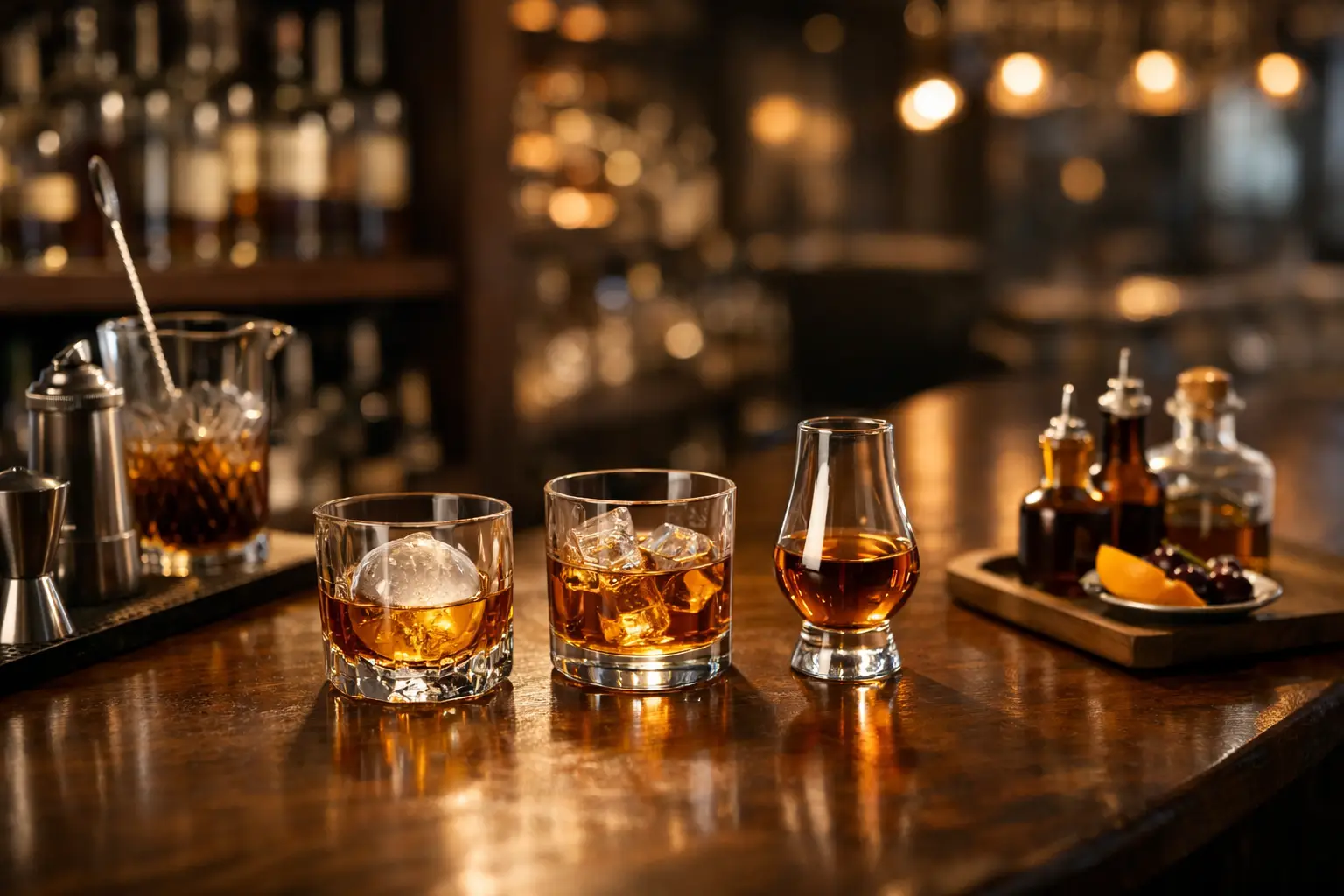
A bourbon shelf can catch your eye, but it is not what makes you stay for another round. The bourbon bars people return to have a different kind of appeal: a bartender who can make a useful recommendation, food that holds up beside a pour, and a room where ordering a familiar Old Fashioned feels just as welcome as trying something new.
That is the sweet spot for a neighborhood tavern. Great whiskey deserves attention, but it should never make the experience feel stiff, exclusive, or overly precious. A good bar gives guests a reason to settle in after work, meet friends for pizza, or turn an ordinary weeknight into a better one.
Bourbon Bars Should Feel Welcoming First
Bourbon has a reputation for big flavors, serious collectors, and bottles that can be difficult to find. All of that can be part of the fun. But a great bourbon bar understands that most guests are not looking for a lecture before dinner. They want a good drink, a comfortable seat, and someone behind the bar who knows how to guide them without talking down to them.
That starts with a menu that gives people options. There should be familiar names for the guest who knows exactly what they like, along with a few interesting bottles for anyone ready to branch out. The best selections show range instead of chasing rarity alone. A reliable wheated bourbon, a spicy high-rye pour, a richer barrel-proof choice, and a few well-made classics create more useful variety than a wall of bottles nobody wants to open.
Price matters, too. A strong list should have pours for a casual Tuesday as well as special-occasion bottles. When every option feels like a splurge, bourbon becomes a display item instead of a drink people can enjoy. The goal is a bar program that invites regulars to come back, compare a few styles over time, and find their own go-to order.
A Curated Bourbon List Has a Point of View
A large selection is not automatically a better selection. The best bourbon bars build a list that helps guests understand the spirit without turning the menu into homework. Kentucky bourbon may take center stage, but a thoughtful program can also make room for American whiskey styles that bring something different to the table.
Know the Flavors Behind the Pour
Bourbon gets much of its character from its grain recipe, aging, and the new charred oak barrels required for its production. That is why one pour may bring caramel, vanilla, and toasted oak, while another leans into pepper, baking spice, roasted nuts, or dark fruit.
For a guest who likes a softer, rounder whiskey, a wheated bourbon is often a comfortable place to start. Replacing rye with wheat in the grain recipe can create a gentler, sweeter profile. For someone who likes a little more snap, a high-rye bourbon can deliver brighter spice and a drier finish. Higher-proof pours can be deeply flavorful, but they are not automatically the right choice for every palate or every moment.
The useful question is not, “What is your best bourbon?” It is, “What do you usually enjoy?” A guest who likes bold red wine may appreciate an oak-forward, full-bodied pour. Someone who prefers a smoother cocktail may be happier with a balanced bourbon over one large cube. Those small conversations are where a good bar earns trust.
Keep the Classics Close
Bourbon does not need much to taste good, and that is why classic cocktails belong on the menu. An Old Fashioned lets the whiskey lead, with sugar, bitters, and citrus adding structure rather than covering it up. A Manhattan brings a more herbal, wine-like edge through sweet vermouth. A Whiskey Sour offers brightness and refreshment, making it an easy order for guests who want bourbon flavor without a spirit-forward drink.
There is room for seasonal drinks, too, especially when they use fresh citrus, spice, or a little local character. Still, a cocktail list should not become so busy that it loses the point. If the bourbon is well chosen, the drink should let it show up.
Good Food Makes the Bar Better
A bourbon bar with no answer for hunger leaves half the experience on the table. Whiskey’s caramelized, oak-driven character shines with food that offers salt, smoke, spice, richness, or a little sweetness. The right bite can soften the heat of a higher-proof pour, pull out hidden flavors, and give the table a reason to order another round.
Pizza is especially at home in this setting. A classic pepperoni pie works with a bourbon that has enough spice to stand up to the savory meat and melted cheese. A Buffalo Chicken pizza can handle a pour with sweeter notes, where vanilla and caramel help calm the heat. For a bolder specialty pie, the answer may be a straightforward whiskey cocktail with enough citrus to reset your palate between slices.
The same thinking applies to tavern favorites. Garlic knots and red sauce welcome a smooth, easy-drinking bourbon. Meatball appetizers pair well with a whiskey that has toasted oak and baking spice. Quesadillas bring richness and crunch, making them a natural match for an Old Fashioned or a simple bourbon pour over ice.
Pairing is not about rigid rules. Some guests will want a neat pour with a slice of pizza, and some will want a cold beer before they ever consider whiskey. Both are good calls. A tavern should make room for the person sampling a new bottle and the friend ordering a lager with their favorite pie.
The Right Glass Is the One You Will Enjoy
There is a lot of ceremony around bourbon, but the practical choices are simple. Neat is the clearest way to taste the whiskey as it is. A few drops of water can open up aroma and ease the heat, especially with higher-proof bottles. One large cube chills the drink slowly and adds a little dilution as you go.
None of these choices is more correct than the others. If you are new to bourbon, try ordering a one-ounce pour neat with a side of water. Take a small sip, then add a few drops of water if the alcohol feels sharp. You will learn quickly whether you prefer it untouched, slightly opened up, or on ice.
Bartenders can make this process comfortable by offering guidance without pressure. Ask for a recommendation in a flavor range, not a test of your whiskey knowledge. “Something smooth,” “something spicy,” or “something that works with pizza” gives a good bartender plenty to work with.
Why Neighborhood Bourbon Bars Matter
The bottles matter. The food matters. But the reason people build a favorite bar is usually the feeling of the place. It is seeing a familiar face behind the bar, knowing the kitchen can deliver, and finding a table where a quick drink can turn into a long conversation.
That is what a bourbon program should support. It should give the tavern a little depth without losing its ease. It should make a date night feel more considered, a group dinner feel more festive, and an after-work stop feel worth the time.
At The Declaration Tavern, that balance belongs naturally beside fresh-dough pizza, cold drinks, and a curated bourbon selection. The best bourbon bars do not ask guests to perform expertise. They pour something good, bring out food with real flavor, and make the neighborhood feel like the right place to be.
Next time you are choosing a bourbon bar, skip the temptation to judge it by bottle count alone. Find the place where the pour fits the food, the bartender meets you where you are, and there is always a good reason to stay for one more slice.
Leave a Reply