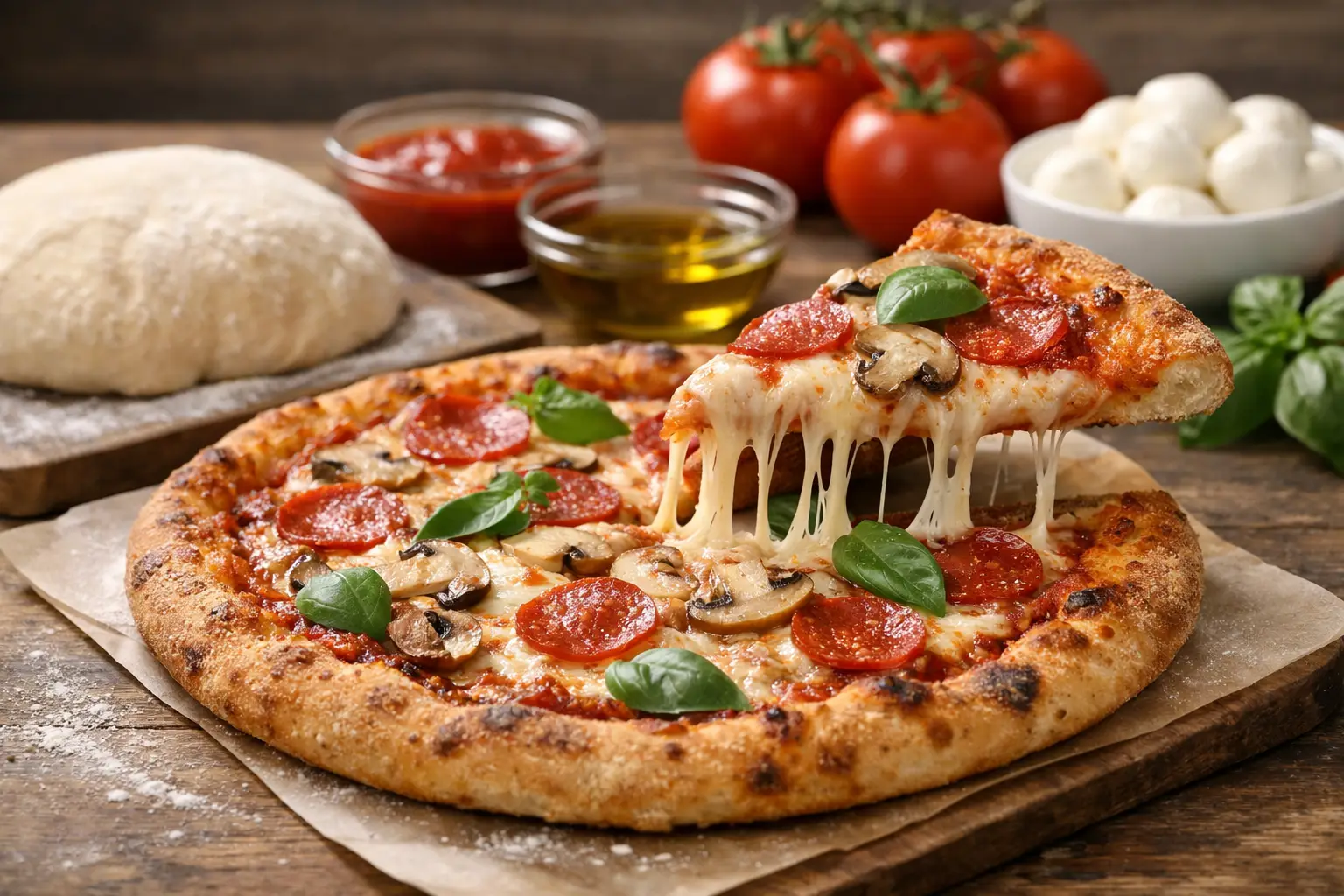
Some pizza details sound small until you taste the difference. Daily dough pizza benefits show up the second a hot pie hits the table – in the aroma, the chew of the crust, and that balance between a crisp edge and a tender center.
For a neighborhood tavern and pizza spot, fresh dough made every day is not just a kitchen routine. It shapes the whole experience. It affects how the crust bakes, how the toppings sit, and how satisfying each slice feels with a cold drink in hand. If you have ever wondered why one pizza feels forgettable and another feels worth coming back for, the dough is usually a big part of the answer.
What daily dough pizza benefits really mean
When a restaurant makes dough daily, it means the base of the pizza is treated like an active ingredient, not a shelf-stable shortcut. Flour, water, yeast, salt, and oil are simple enough on paper, but the timing matters. Fresh mixing, proper proofing, and careful handling all change the final pie.
That matters because pizza crust is not just there to hold toppings. It brings structure, flavor, and texture. A good crust should have some character of its own. You want a little pull when you bite it, a little crackle at the edge, and enough strength to support sauce, cheese, and toppings without turning limp halfway through the slice.
Fresh daily dough helps make that possible. It gives the kitchen more control over fermentation, moisture, and bake quality. That kind of control leads to pizza that feels handcrafted instead of mass-produced.
Better flavor starts before the oven
One of the biggest daily dough pizza benefits is flavor. Not flashy flavor, not something covered up by extra cheese or heavy toppings, but the kind of flavor that builds from the crust outward.
As dough rests and proofs, it develops subtle depth. You get a mild tang, a richer bread note, and a more balanced finish than you typically find in premade or heavily processed dough. Even if a guest cannot explain exactly what tastes better, they can usually tell when the crust has more life to it.
This also makes the whole pizza eat better. House red sauce tastes brighter on a crust with a fresh, clean baked flavor. Pepperoni, sausage, vegetables, or specialty toppings stand out more clearly when the dough is doing its job instead of getting in the way. A pizza should taste like a complete pie, not like separate ingredients piled on top of a bland base.
Texture is where fresh dough wins people over
Flavor gets attention, but texture is what brings people back. Fresh dough gives pizza a better range of textures in a single slice. The outer crust can get nicely browned and crisp, while the inside stays airy and tender.
That contrast matters. If dough is overworked, old, or inconsistent, the result is often one-note. It can turn dense, bready, dry, or strangely chewy in the wrong way. Fresh daily dough gives the crust more elasticity and better oven response, which helps create that satisfying bite most pizza fans are chasing.
There is some nuance here, of course. Not every pizza style is aiming for the exact same crust. Tavern-style pies, thicker specialty builds, and more topping-heavy combinations all need slightly different handling. But daily-made dough gives a kitchen the flexibility to hit the style it wants with more precision. That is a real advantage whether you are ordering a classic cheese pizza or something bolder.
Daily dough supports consistency from pie to pie
A neighborhood favorite has to do more than make one good pizza. It has to make good pizza on a Tuesday night, during a Friday rush, and for the group ordering several pies at once. Another major part of daily dough pizza benefits is consistency.
When the dough is made in-house on a regular schedule, the kitchen can monitor how it is behaving. Staff can adjust for weather, humidity, temperature, and proofing time. Those details may sound behind-the-scenes, but they affect the pizza you actually eat.
That means a more reliable crust color, better rise, and a more even bake. It also means the dough can be matched more carefully to the menu. Specialty pizzas with a lot going on need a crust that can hold up without feeling heavy. Simpler pies need a crust with enough flavor to stand on its own. Daily dough helps deliver both.
The toppings taste better on a stronger foundation
Fresh dough is good on its own, but it becomes even more valuable when a menu includes a mix of classics and specialty combinations. A pizza with pepperoni and mozzarella has one set of demands. A pie with buffalo chicken, pickles, pineapple, or layered savory toppings asks something different from the crust.
The foundation has to support moisture, heat, fat, and weight without collapsing into a soggy center. That is one of the less obvious daily dough pizza benefits. A properly made crust creates the right base for sauce, cheese, and toppings to stay in balance.
When that balance is right, every bite feels cleaner and more intentional. You taste the toppings, but you also notice the crust underneath them. That is what makes inventive pizzas feel well built instead of overloaded. At a place like The Declaration Tavern, where handcrafted pies are part of the identity, that foundation matters.
Fresh dough fits the tavern experience
Pizza does not live in a vacuum. It is part of a night out, a weeknight dinner, a casual meet-up, or a group table with drinks and appetizers coming around. That is why daily dough matters beyond the kitchen.
A fresh-made pizza has a better table presence. The crust looks more inviting, the slices hold together better, and the whole pie feels more satisfying to share. It pairs naturally with a cold beer, bourbon pour, or whatever drink is on hand because the food has enough character to stand beside it.
That makes a difference in a tavern setting. Guests are not just looking for something fast. They want something dependable, flavorful, and easy to enjoy with other people. Fresh dough contributes to that comfort. It helps the pizza feel like a real part of the experience, not just filler next to the bar program.
Is fresh daily dough always better for every pizza?
Most of the time, yes, but there are still trade-offs worth mentioning. Fresh dough requires more labor, more planning, and more attention. It is not the easiest route for a kitchen, which is exactly why it signals a stronger commitment to quality.
There is also an important difference between dough made daily and dough used too early. Good pizza dough needs enough time to develop. So the benefit is not just that it was mixed that day. The real benefit comes from a kitchen that understands timing, fermentation, and handling. Daily dough works best when it is part of a disciplined process.
For guests, that distinction shows up as consistency and taste. You may not see the prep work, but you can tell when the crust was given proper care. It is the difference between pizza that feels rushed and pizza that feels built right.
Why daily dough pizza benefits matter for takeout too
Fresh dough is not only a dine-in advantage. It helps on takeout and delivery orders as well. Pizza that starts with a stronger crust generally travels better. The slice stays intact more easily, the edge keeps more of its texture, and the center is less likely to go soft too quickly.
That matters for busy weeknights, office lunches, and family orders. If you are bringing pizza home, you still want that first slice to have some structure and bite. Fresh daily dough improves the odds that the pie arrives tasting like it was meant to taste.
It also helps reheated slices the next day. A well-made crust tends to bounce back better than one that was weak from the start. Leftover pizza should still be enjoyable, not something you eat only because it is there.
The real value is simple
Daily dough pizza benefits come down to a better pizza from the ground up. Better flavor, better texture, better support for toppings, and better consistency across the menu. Those are not marketing extras. They are the details that make one slice good and another one memorable.
If you care about handcrafted food, the crust should matter to you. It is the first thing the kitchen builds and the thing that carries every other ingredient. When dough is made fresh every day, that care shows up where it counts most – in the bite. And for anyone looking for a reliable local pizza worth repeating, that is a pretty good place to start.
Leave a Reply