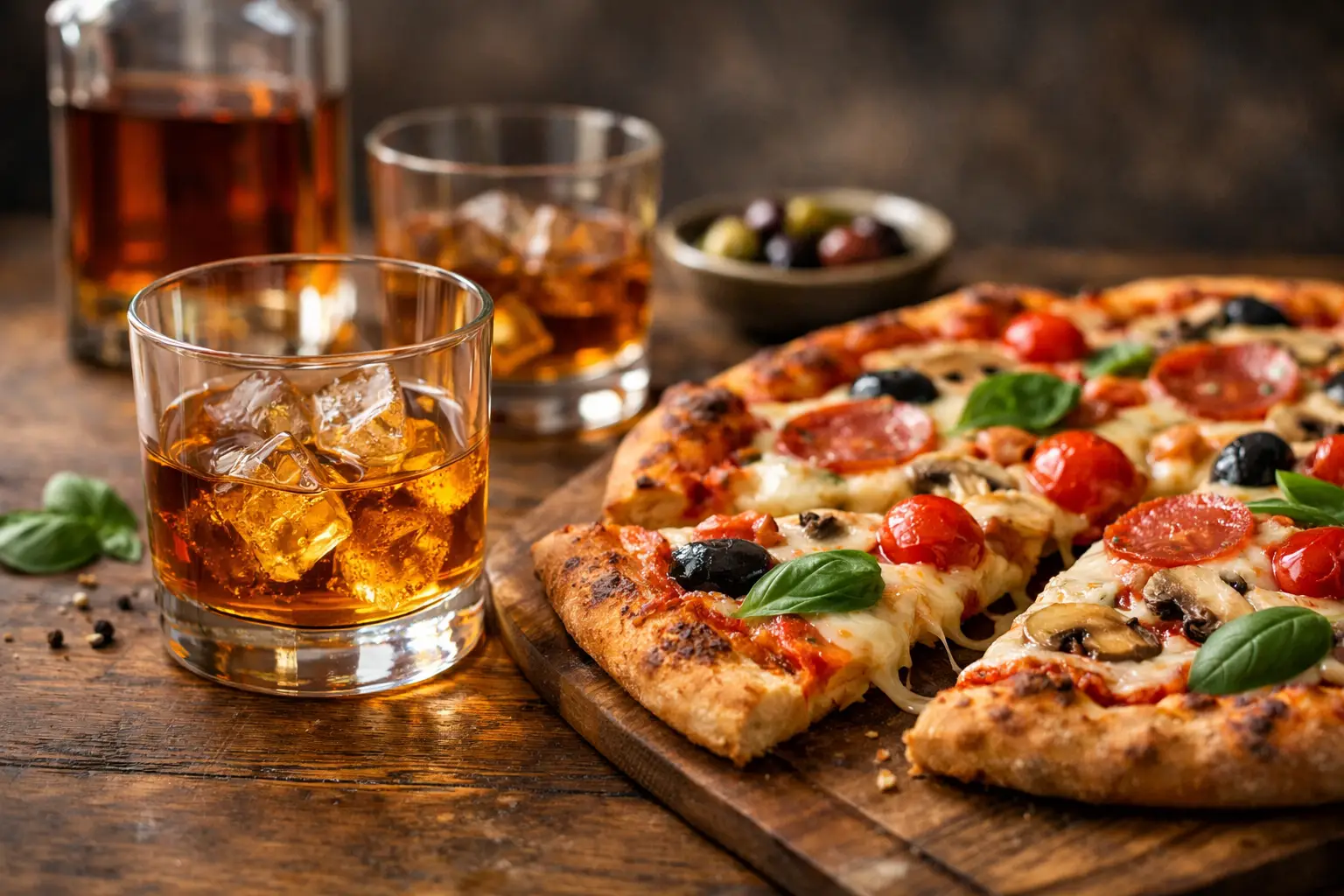
A hot pepperoni pie and a short pour of bourbon can do more together than most people expect. If you have ever wondered how bourbon complements pizza flavors, the answer starts with contrast. Pizza brings heat, salt, fat, acid, and melted cheese. Bourbon brings caramel, vanilla, oak, spice, and a little warmth of its own. Put them side by side, and each bite and sip can make the other taste fuller, sharper, or smoother.
That pairing works especially well in a tavern setting because bourbon is not trying to compete with pizza. It is there to round things out. A good pour can soften spice, lift smoky toppings, and give richer pies a cleaner finish. The trick is knowing which flavors on the pizza are leading the way.
How bourbon complements pizza flavors in real life
The easiest way to think about pizza and bourbon is to focus on what is happening on your palate. Cheese brings richness. Tomato sauce adds acidity and sweetness. Toppings can push the pizza salty, smoky, spicy, tangy, or sweet. Bourbon meets those flavors with sweetness from the grain, depth from barrel aging, and enough heat to keep things lively.
That does not mean every bourbon works with every slice. A high-proof pour can overpower a delicate cheese pizza. A sweeter wheated bourbon can get lost next to a pie loaded with hot peppers and buffalo sauce. Pairing well is less about rules and more about balance.
Bourbon helps with rich, cheesy pizzas
Cheese-heavy pizzas often need a drink that cuts through the richness without turning sharp or bitter. Bourbon does that nicely because its oak and spice give structure, while caramel and vanilla keep the sip approachable. After a bite of mozzarella, provolone, or ricotta, bourbon can reset your palate and make the next bite taste fresh again.
This is why a classic cheese pie or a meatball-topped pizza often feels surprisingly natural with bourbon. The whiskey brings enough depth to stand up to the richness, but it still leaves room for the crust, sauce, and cheese to come through.
It plays especially well with salty and smoky toppings
Pepperoni, sausage, bacon, and ham all bring salt and savory fat to the table. Bourbon answers with sweetness and oak. That sweet-savory contrast is where a lot of the appeal comes from. A sip after a bite of pepperoni can make the spice taste rounder and the cured meat taste more layered.
Smokier toppings can be even better. If the pizza has char on the crust or roasted meat on top, bourbon often echoes those darker flavors. The result feels cohesive rather than heavy, especially if the pour is balanced and not too hot.
Best pizza styles for bourbon pairings
Some pizzas make bourbon look easy. Others ask for a little more thought. Here are the styles that usually pair best and why.
Pepperoni and bourbon
Pepperoni is one of the clearest examples of how bourbon complements pizza flavors. The fat in the pepperoni softens the alcohol bite, while the bourbon’s caramel notes smooth out the spice. If the cup-and-char edges get crisp, the whiskey’s oak and baking spice can make those browned flavors pop.
A middle-of-the-road bourbon works best here. Too sweet, and the pairing can feel sticky. Too aggressive, and it can bury the pizza.
Buffalo chicken and bourbon
Buffalo chicken pizza brings heat, tang, creaminess, and usually a little extra salt. Bourbon can calm the heat better than many people expect, especially if the whiskey leans toward vanilla and brown sugar rather than heavy rye spice. The sweetness helps tame the buffalo sauce, while the barrel character keeps the pairing from feeling one-note.
This is one of those pairings where proof matters. A very high-proof bourbon can amplify the heat. A softer, rounder pour usually lands better.
Hawaiian or sweet-savory pies
Pizzas with pineapple, ham, or sweeter sauces can work well with bourbon because the whiskey already carries dessert-like notes. Vanilla, caramel, maple, and toasted oak often connect naturally with fruit and cured meat. The pairing feels familiar because the sweet-savory rhythm is already built into both the pizza and the bourbon.
The trade-off is that too much sweetness on both sides can flatten the meal. If the pie is already sweet, a drier bourbon with more spice can create better balance.
Pickle, vinegar, and tang-forward specialty pies
Tangy pizzas are trickier, but they can be excellent with the right pour. A pie with pickles or a vinegar-forward topping has sharp edges. Bourbon can soften those edges and add depth, turning a bright, punchy bite into something more rounded. That contrast is often what makes inventive specialty pizzas so fun with whiskey.
Still, acid can also make bourbon taste hotter. For these pies, lower proof and a smoother finish usually work better than bold barrel strength pours.
Crust, sauce, and toppings all matter
People tend to focus on toppings first, but crust and sauce deserve just as much attention. Fresh dough with a well-baked edge adds toast, char, and chew. Those flavors give bourbon more to work with. A crisp, blistered crust often brings out the whiskey’s oak and baking spice in a way a softer slice cannot.
Sauce changes the equation too. A bright red sauce with a little sweetness can connect beautifully with bourbon’s caramel notes. A white sauce or garlic-heavy base shifts the pairing toward richness, where oak and spice become more useful. If the pizza has a hot honey finish, bourbon can either elevate it or make it feel too sweet. It depends on how heavy the drizzle is and how sweet the pour tastes.
Choosing the right bourbon for the pie
You do not need a long whiskey list or a tasting notebook to get this right. Start by matching intensity. Mild pizzas do best with softer bourbons. Bigger pies with smoked meats, spicy sauces, or bold toppings can handle more proof and more oak.
Wheated bourbons usually pair well with creamy, spicy, or tangy pizzas because they come across softer and sweeter. Rye-forward bourbons often shine with salty meat toppings because the extra spice keeps the pairing lively. Older bourbons can be great with heavily charred crusts or richer specialty pies, but too much barrel can dominate a simple slice.
Serving style matters as well. Neat bourbon gives the fullest expression, but a cube of ice can open it up and tone down the heat. That can be the better call with spicy pizza or a casual weeknight meal when you want the pairing to stay easygoing.
How to enjoy bourbon with pizza without overthinking it
The best pairing is often the one that makes you want another bite and another sip. Start with the pizza in front of you and ask one simple question: what stands out most? If it is spice, look for a smoother bourbon. If it is salt and meat, a bourbon with a little more structure usually works. If the pizza leans sweet, make sure the whiskey brings enough oak or spice to keep things balanced.
It also helps to take smaller sips than you would on their own. Bourbon can dominate if the pour is too large or too warm. A modest pour lets the pizza stay the star while the whiskey fills in around it.
That is part of what makes this pairing such a good fit for a place like The Declaration Tavern. Handcrafted pizza, a curated bourbon selection, and a relaxed neighborhood atmosphere all point to the same idea: good flavor does not need to be fussy. It just needs the right match.
Why this pairing keeps working
Beer will always have a place with pizza, and there is nothing wrong with that. But bourbon brings a different kind of payoff. It adds warmth, sweetness, spice, and depth without washing out the food. When the pairing clicks, the cheese tastes richer, the crust tastes toastier, and the toppings show more detail.
That is really the answer to how bourbon complements pizza flavors. It does not cover them up. It sharpens contrast where the pizza is rich or salty, and it adds harmony where the pie already has smoke, sweetness, or char. The next time you are ordering a classic pepperoni, a Buffalo chicken pie, or something a little more adventurous, a thoughtful pour of bourbon might be the move that makes the whole meal come together.
Leave a Reply