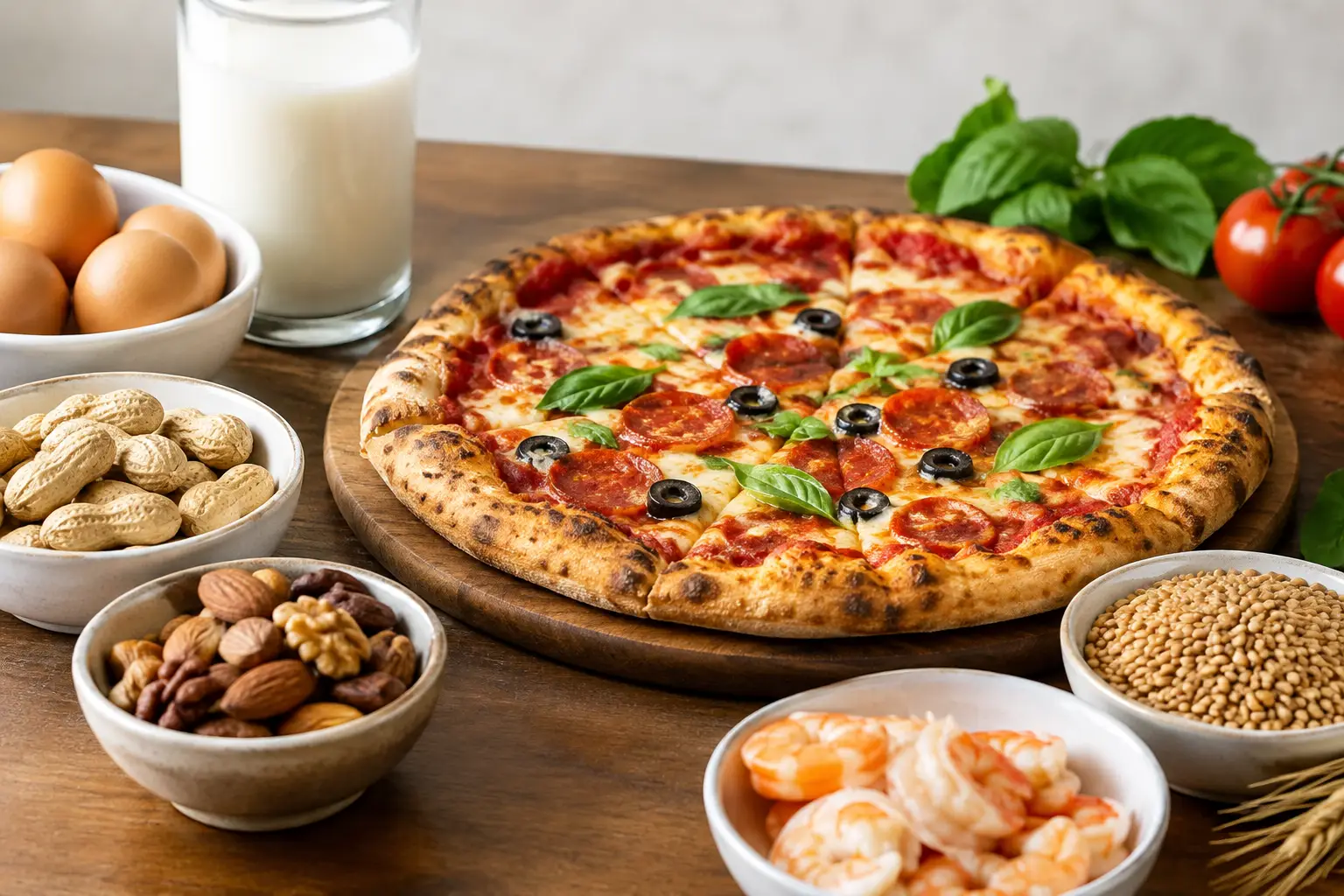
A great pizza order should start with anticipation, not guesswork. This guide to pizza allergens helps diners spot the ingredients and kitchen questions that matter most, whether you are ordering a classic cheese pie, trying a specialty pizza, or putting together a table full of appetizers and cold drinks.
Pizza can look simple from across the table: crust, sauce, cheese, toppings. But each layer can carry its own allergen concerns, and the biggest factor is often how the food is prepared in a shared kitchen. The right order depends on your specific allergy, its severity, and what a restaurant can safely accommodate that day.
Guide to Pizza Allergens: Start With the Crust
For many guests, wheat is the first ingredient to ask about. Traditional fresh pizza dough is generally made with wheat flour, which means it contains gluten. Flour can also travel in a busy kitchen, especially around dough stretching, prep surfaces, and pizza ovens. A gluten-free crust, if available, is not automatically appropriate for someone with celiac disease or a wheat allergy unless the restaurant can explain its preparation procedures and cross-contact risks.
Egg is another ingredient worth checking in dough. Some dough recipes do not use it, while others may. The same goes for soy, which can appear in dough conditioners, flour blends, or oils depending on the recipe. If wheat, egg, soy, or gluten is a concern, ask about the specific crust rather than assuming all pizza dough follows the same formula.
Sesame has become a more common question, too. It may be present in a crust topping, seasoning blend, or another item prepared nearby. If you have a sesame allergy, mention it clearly when you order, even when the pizza itself does not appear to include sesame.
Cheese, Sauce, and Toppings Need a Closer Look
Cheese is a central part of most pizza, so milk is one of the most common pizza allergens. Mozzarella, provolone, ricotta, Parmesan, and creamy sauces all typically contain milk. Removing cheese may make a pie workable for some diners with a milk allergy, but it does not solve the issue if cheese touches shared utensils, prep stations, or oven surfaces.
Sauce deserves its own question. A simple house red sauce may sound straightforward, but recipes vary. Some sauces contain cheese, butter, or a seasoning blend with less obvious ingredients. White sauces, ranch-style drizzles, buffalo sauces, garlic sauces, and specialty spreads may contain milk, egg, soy, or other allergens. A pizza with a familiar name can still be built differently from one restaurant to the next.
Then come toppings. Meats may contain soy, milk, wheat, or spices with undisclosed components. Pickled vegetables can involve shared utensils or preparation containers. Specialty toppings and finished drizzles often add the most flavor, but they also create the most questions. That does not mean adventurous pizza is off the table. It means the full build matters more than the name on the menu.
For a quick reference, the allergens most often worth discussing with a pizza restaurant are:
- Wheat and gluten in dough, flour dust, breaded toppings, and some sauces
- Milk in cheese, creamy sauces, butter, and finished drizzles
- Egg in certain doughs, dressings, sauces, and breaded items
- Soy and sesame in dough ingredients, oils, seasoning blends, and toppings
- Tree nuts, peanuts, fish, or shellfish in specialty ingredients or shared kitchen preparation
Not every pizza kitchen uses every one of these ingredients. The point is to ask based on your allergy, not to assume that a plain-looking pie is automatically free of risk.
Cross-Contact Is the Kitchen Question That Counts
An allergen-free ingredient is not always an allergen-free meal. Cross-contact happens when an allergen transfers from one food, tool, surface, or pair of gloves to another. In a pizza kitchen, that can happen through flour in the air, a shared cutter, a prep table, topping bins, oven screens, or a pizza that is baked beside another order.
This is especially relevant for serious food allergies and celiac disease. A restaurant may be able to leave an ingredient off your pizza, yet still be unable to guarantee that no cross-contact occurred. That is not a lack of care. It is a practical reality of kitchens that make many orders quickly using shared equipment.
Be direct about what you need. Saying, “I have a severe milk allergy. Can the kitchen safely prepare this without dairy and avoid cross-contact?” gives the team useful information. Saying only “no cheese” may sound like a preference rather than a medical need.
If a staff member cannot confidently confirm an accommodation, choose the safer option. A trustworthy restaurant would rather help you find another menu item or be honest about a limitation than make a promise it cannot keep.
How to Order Pizza With an Allergy
Start the conversation before the rush if you can. Calling ahead or adding a clear note to an online order can help, but a note alone is not always enough for a severe allergy. Speak with a team member and ask whether the kitchen can accommodate your specific allergen.
Keep your questions focused. Ask whether the allergen is in the crust, sauce, cheese, toppings, or finishing sauce. Then ask how the item is prepared and whether separate utensils, gloves, pans, or cutting tools are available. You do not need a long interrogation. You need a clear answer about ingredients and cross-contact.
For group orders, keep allergy-friendly items clearly identified. Order them separately when possible, request that they stay in their own box, and make sure everyone at the table knows which pizza belongs to whom. A single shared pizza cutter can undo careful preparation once the order arrives.
Side dishes matter, too. Garlic knots, salads, meatball appetizers, quesadillas, wings, and desserts may carry allergens that do not appear on the pizza itself. Salad dressings often contain egg or milk. Fried or breaded foods can contain wheat and may share fryers. Even a garnish or dipping sauce can change the allergen picture.
Questions Worth Asking Before You Order
A few good questions can make the decision much easier. Ask whether the dough contains your allergen, whether the sauce or seasoning blend includes it, and whether toppings are stored or handled separately. For severe allergies, ask if the kitchen can prevent cross-contact during preparation, baking, cutting, and boxing.
It also helps to ask what the restaurant cannot do. That answer is often more useful than a vague reassurance. A restaurant might be able to make a cheese-free pizza but not guarantee a dairy-free environment. Or it may offer a gluten-free crust but prepare it in a kitchen where wheat flour is used throughout the day. Those details let you choose based on your own comfort level and medical guidance.
At Declaration Tavern, the best approach is to share your allergy before ordering and ask the team about the current ingredients and preparation options. Menus, suppliers, and recipes can change, so the most accurate answer will always come from the restaurant at the time of your visit or order.
A Better Pizza Night Starts With Clear Communication
Food allergies do not have to take the fun out of pizza night. They simply call for a little more conversation before the first slice hits the table. Choose a place that answers plainly, be specific about the allergen and its severity, and let the kitchen tell you what can be prepared safely. That leaves more room for what you came for: a fresh, flavorful meal and a good night in the neighborhood.
Leave a Reply