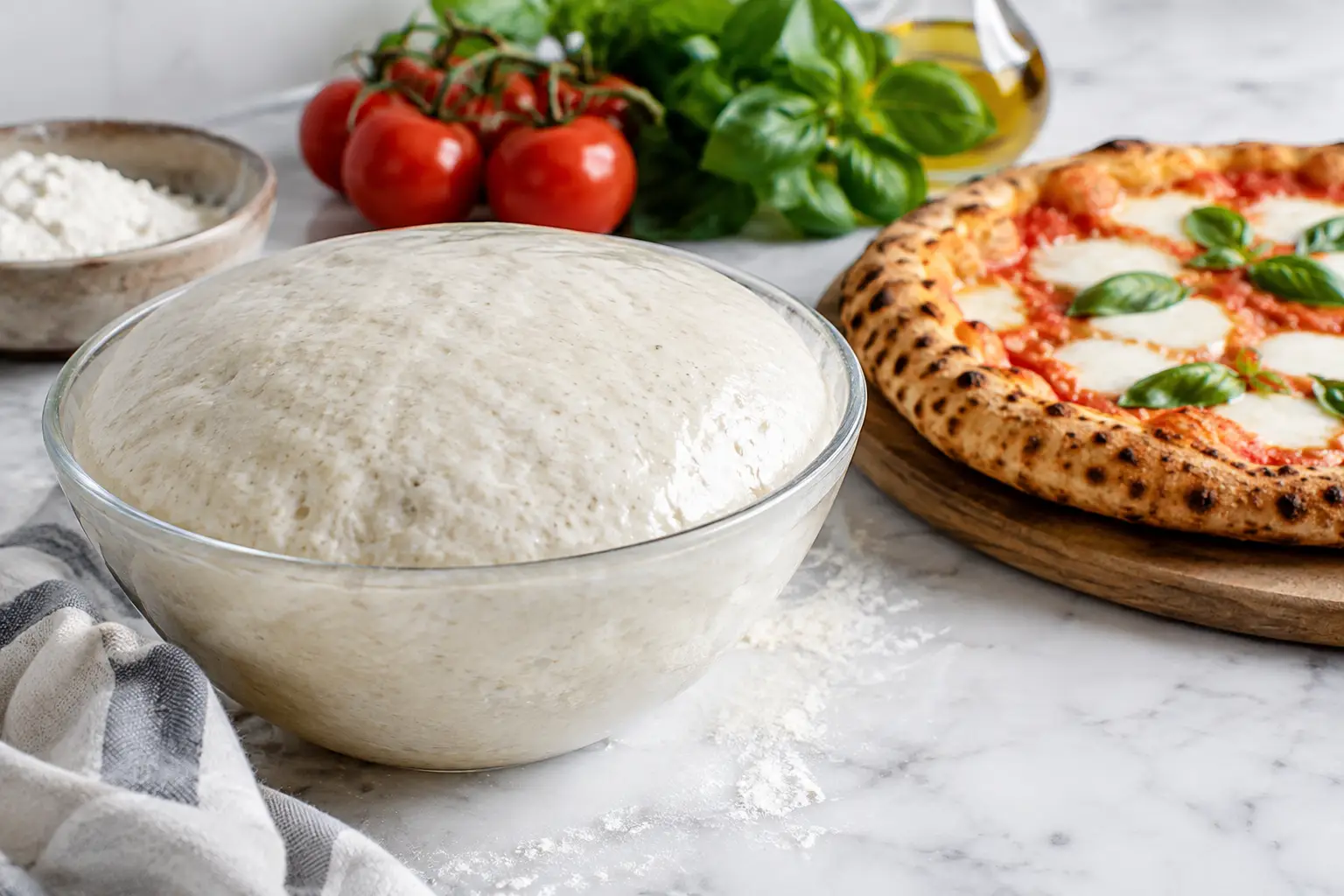
A great pizza starts working long before it reaches the oven. Pizza fermentation is the quiet stretch of time when fresh dough develops flavor, structure, and the satisfying chew that makes one more slice feel like the right call. It is why dough made with care tastes fuller than a rushed crust, even before the sauce, cheese, and toppings get involved.
At a neighborhood tavern, that difference matters. Pizza should be easy to enjoy, but it should never taste like an afterthought. Fresh dough, house red sauce, a hot oven, cold drinks, and the people around your table all work better when the crust has real character.
What Pizza Fermentation Actually Does
Fermentation begins when yeast consumes sugars in the dough. As it works, it creates carbon dioxide, which helps the dough rise, along with flavorful compounds that give baked crust more depth. The result is not simply a bigger dough ball. It is a crust with a better aroma, a more open interior, and a browned, lightly crisp exterior.
Think of the difference between plain bread and bread with a little toastiness, tang, and chew. That is the kind of lift fermentation brings to pizza. It gives the dough a foundation that can stand up to classic pepperoni, a hearty meatball topping, or a bold pie like Buffalo Chicken without disappearing under the good stuff.
Fermentation also changes how the dough handles. Well-rested dough stretches more easily and is less likely to snap back or tear. That matters when shaping a pie by hand. A dough that is relaxed and properly fermented can be formed into an even crust, helping it bake consistently from the center to the edge.
Time Is the Main Ingredient
Flour, water, salt, and yeast look simple on paper. The real personality comes from time. A dough fermented for a short period can still make pizza, especially when speed matters, but it often has a milder flavor and tighter texture. Give that same dough more time under controlled conditions, and it becomes more interesting.
Longer fermentation allows enzymes in the flour to break down starches into sugars. Those sugars feed the yeast and help the crust brown in the oven. They also create a subtle sweetness that balances savory sauce, salty cheese, spicy toppings, and smoky meats.
That does not mean every pizza needs to ferment for days. The best timeline depends on the style of pizza, the amount of yeast, the temperature of the dough, and the desired result. A quicker room-temperature fermentation can create a soft, straightforward crust. A cold fermentation in the refrigerator can build deeper flavor and a more complex chew. Neither approach is automatically better. The goal is a dough that suits the pie and bakes well in the oven being used.
Cold Fermentation Brings More Flavor
Cold fermentation slows the yeast down. Instead of racing through the dough in a few hours, yeast works gradually over a longer period, often overnight or beyond. That slower pace gives the dough more time to develop flavor without rising too fast.
For pizza fans, the payoff shows up in the first bite. A cold-fermented crust may have a light tang, a wheaty aroma, and a richer baked flavor that feels more complete. It also tends to brown beautifully when the oven heat is right.
There is a trade-off. Cold dough needs planning, storage space, and enough time to warm slightly before shaping. If it is used straight from the refrigerator, it can be stiff and difficult to stretch. If it sits out too long, it can overproof and lose strength. Good pizza fermentation is not about following a magic number. It is about paying attention to the dough in front of you.
Temperature Can Make or Break the Dough
Temperature controls the pace of fermentation. Warm dough moves quickly. Cool dough takes its time. Even a few degrees can change when a dough is ready to shape, so experienced pizza makers watch the dough rather than the clock alone.
In a warm kitchen, too much yeast or too much time can push dough past its best point. It may become overly soft, sticky, and difficult to handle. The finished crust can taste overly yeasty or bake up flatter than expected. On the other hand, dough that has not fermented enough often feels dense and resists stretching. Its flavor can be bland, and its texture can be heavy.
The sweet spot is dough that feels airy but still strong. It should stretch with a little resistance, hold its shape, and show small bubbles beneath the surface. That is the kind of dough ready for sauce, cheese, and a turn in a hot oven.
Fermentation Is Not the Same as Proofing
These terms are often used together, but they describe different parts of the process. Fermentation is the larger process of yeast developing gas and flavor in the dough. Proofing is the final rest after the dough has been portioned into individual balls and before it is shaped into pizza.
Both matter. Bulk fermentation builds the dough’s overall flavor and strength. Final proofing lets each dough ball relax so it can stretch into a pizza without fighting back. Skip either stage, and the crust may be harder to work with or less enjoyable to eat.
For a busy kitchen, consistency is everything. Dough needs a repeatable system: measured ingredients, a reliable mixing process, clear timing, and storage that stays at the right temperature. That kind of care is what makes a weeknight cheese pizza as dependable as a specialty pie loaded with big flavors.
Why Fresh Dough Changes the Whole Pie
Pizza fermentation is only one part of great dough, but it influences nearly every bite. A well-fermented crust has enough flavor to be satisfying on its own, yet it stays balanced enough to support the toppings. It can be crisp at the edge, tender through the middle, and sturdy enough to hold a generous slice without turning tough.
It also creates contrast. Rich mozzarella tastes better against a crust with a little toast and chew. Bright house red sauce feels livelier when the dough has a touch of natural sweetness. Spicy Buffalo Chicken, salty pepperoni, tangy pickles, pineapple, and smoky ham all benefit from a crust that brings more than plain flour flavor to the table.
That is why fresh dough is worth the daily effort. At The Declaration Tavern, pizza is built for the kind of meal that can start with garlic knots, turn into a round of cold drinks, and run longer than planned because the table is having a good time. The crust has to carry its share of that experience.
What to Look for in a Great Crust
You do not need to know the dough schedule to recognize good fermentation. Start with the aroma. Freshly baked pizza should smell warm, lightly toasted, and inviting, not sharply yeasty. Look at the edge of the crust, too. It should have color and some variation, with small blisters or bubbles that show the dough had room to expand.
Then take a bite. A good crust should not feel dry, gummy, or overly bready. It should have a little crispness where it meets the oven heat, followed by an interior that is tender with a pleasant chew. Most of all, it should make the toppings taste better, not compete with them.
The next time pizza lands on the table, give the crust a moment before going straight for the center slice. That flavor did not happen by accident. It started with flour, water, yeast, and the patience to let good dough become great pizza.
Leave a Reply