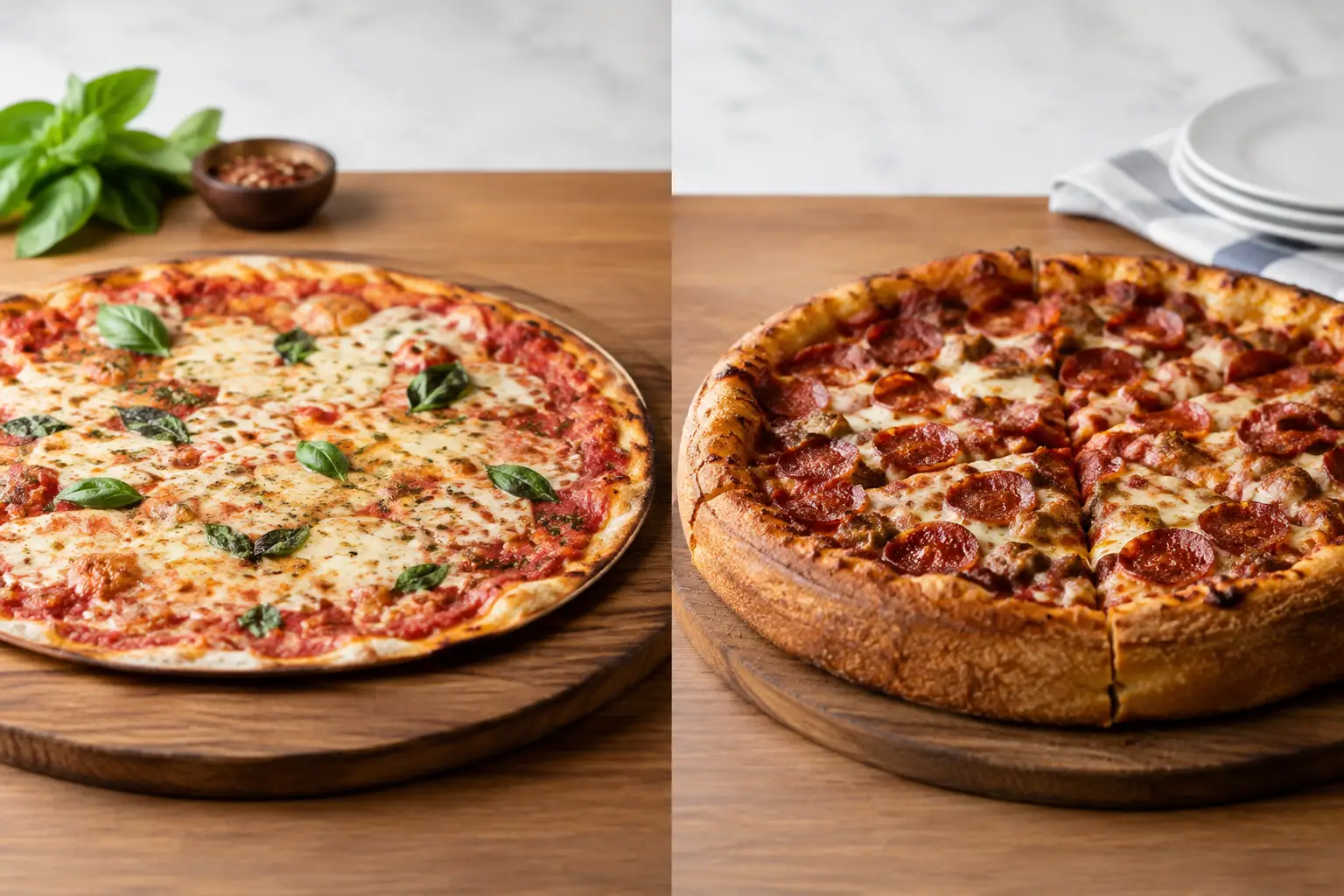
The first bite tells the story. One thin pizza may fold softly at the point, while another breaks with a clean, salty crack and disappears two squares at a time. When people compare thin crust vs tavern pizza, they are often talking about more than crust thickness. They are choosing between two different ways to eat, share, and enjoy pizza.
For a weeknight table in Independence, either can hit the spot. The better choice comes down to the texture you want, how hungry the group is, and whether you are settling in with cold drinks or grabbing a quick meal.
Thin Crust vs Tavern Pizza: The Simple Difference
Thin crust is a broad pizza category. It describes a crust rolled or stretched thinner than a classic hand-tossed or pan pizza. Depending on the dough, oven, and style, thin crust can be crisp at the edge, lightly chewy through the center, or sturdy enough to hold a generous layer of toppings.
Tavern pizza is a specific style within the thin-crust family. It is traditionally associated with Midwestern neighborhood bars and pizzerias, including the Cleveland-area pizza culture. It is usually very thin, dry-baked, crisp from edge to edge, and cut into small squares instead of wide wedges.
So the short answer is this: tavern pizza is thin crust, but not every thin-crust pizza is tavern pizza.
That distinction matters when you are ordering for a group. A thin crust pie can still have some bend and chew. A true tavern-style pie is built for crisp bites, easy sharing, and reaching across the table for one more square.
What Makes Tavern Pizza Its Own Style?
Tavern pizza earned its name the old-fashioned way: it was made to work in a tavern. Guests could order a pie alongside a beer, cocktail, or bourbon, share it without needing a full sit-down dinner setup, and keep talking between bites. Small square cuts make that easy.
The crust is crisp, not bready
A tavern crust is generally rolled very thin and baked until it is firm and cracker-like. There is little to no puffy outer rim. Instead of saving the crust for last, every bite includes that crisp base.
This style is especially good for people who want texture. The crust holds up under cheese and toppings without becoming heavy, and it keeps the focus on the savory combination happening on top.
The cut is part of the experience
Tavern pizza is usually cut into squares, sometimes called party cut. The center pieces have no outer crust, while the edge and corner pieces offer more crunch. That creates a small but real table debate: are you a center-square person or a corner-piece person?
Square cutting also makes a pizza feel more shareable. Someone can grab a small piece while watching the game, another person can try a different specialty pie, and nobody has to commit to a large slice right away.
Toppings go close to the edge
Many tavern pizzas carry sauce, cheese, and toppings nearly all the way to the outer edge. With no large raised crust to leave behind, the pie is designed to deliver full flavor in every square.
That makes topping combinations matter. Classic pepperoni, sausage, mushrooms, and onions all work well. So do bolder combinations that balance salty, tangy, spicy, and sweet flavors. On a crisp crust, toppings should feel generous without making the center soggy.
What Does Standard Thin Crust Pizza Offer?
Thin crust can mean a lot of things, and that flexibility is its strength. Some thin pies have a crisp bottom with a slightly chewy center. Others have a defined outer rim and are cut into traditional slices. Some are lightly topped; others are loaded with enough cheese and meat to satisfy a serious appetite.
Fresh dough makes a noticeable difference here. A well-made thin crust should taste like more than a delivery system for toppings. It can have a light fermented flavor, a toasted edge, and enough structure to make each slice easy to handle.
For diners who like a little give in their pizza, thin crust is often the better fit. You still get a lighter bite than thick, doughy styles, but you may get more chew and a more familiar slice-in-hand experience than a true cracker-crisp tavern pie provides.
Which Style Is Better for Your Table?
There is no universal winner. Thin crust vs tavern pizza is less about better and more about the kind of meal you want.
Choose tavern pizza when the table is sharing, drinks are involved, or you want to sample several flavors. The square cut is made for a casual group night. It also works well when appetites vary, since guests can take a few pieces instead of building a meal around one large slice.
Choose a more traditional thin crust when you want a slightly heartier bite, a little more chew, or the familiar feel of picking up a triangular slice. It can be the right call for dinner when pizza is the main event and you want each person to have a clear slice or two.
Your topping choice can tip the decision, too. A simple cheese or pepperoni pie lets a tavern crust shine because every crisp bite stays balanced. Richer pizzas with chicken, barbecue sauce, buffalo sauce, pineapple, pickles, or multiple meats may benefit from a thin crust with a little more structure and chew.
How to Order for a Group Without Overthinking It
A good pizza table gives people options. Start with one familiar pie, then add one that brings a little personality. A classic pepperoni pizza keeps traditionalists happy, while a more adventurous combination gives the group something to talk about.
At Declaration Tavern, that could mean pairing a dependable favorite with a specialty pizza such as Pepperoni Pickle, Buffalo Chicken, or Luau. The goal is not to make everyone agree on one topping. It is to make sure there is a next bite worth reaching for.
If you are ordering for a casual get-together, consider the rest of the spread as well. A crisp tavern-style pizza pairs naturally with garlic knots, a salad, or meatballs for the table. For a more relaxed night out, a fresh pie alongside a cold beer or a pour from a curated bourbon selection turns pizza into a proper tavern meal without making it formal.
The Details That Matter Most
The label on the menu only gets you so far. A great thin or tavern pizza depends on execution: dough that is made with care, sauce used with restraint, cheese that browns without turning greasy, and toppings that complement the crust instead of weighing it down.
A thin pie should not taste dry or brittle. A tavern pie should not feel like a bland cracker. Both styles need balance. The sauce brings brightness, the cheese brings richness, and the crust gives everything a place to land.
That is why neighborhood pizza has staying power when it is done right. It is familiar enough for a family dinner, interesting enough for a date night, and easy enough for a table of friends who came in for one drink and decided to stay awhile.
Next time you are choosing between thin crust and tavern pizza, order for the moment. Go crisp and square-cut when sharing is the point, or choose a thin, sliceable pie when you want a little more chew. Either way, the best pizza is the one that leaves the table quieter for a minute because everyone is busy taking the next bite.
Leave a Reply