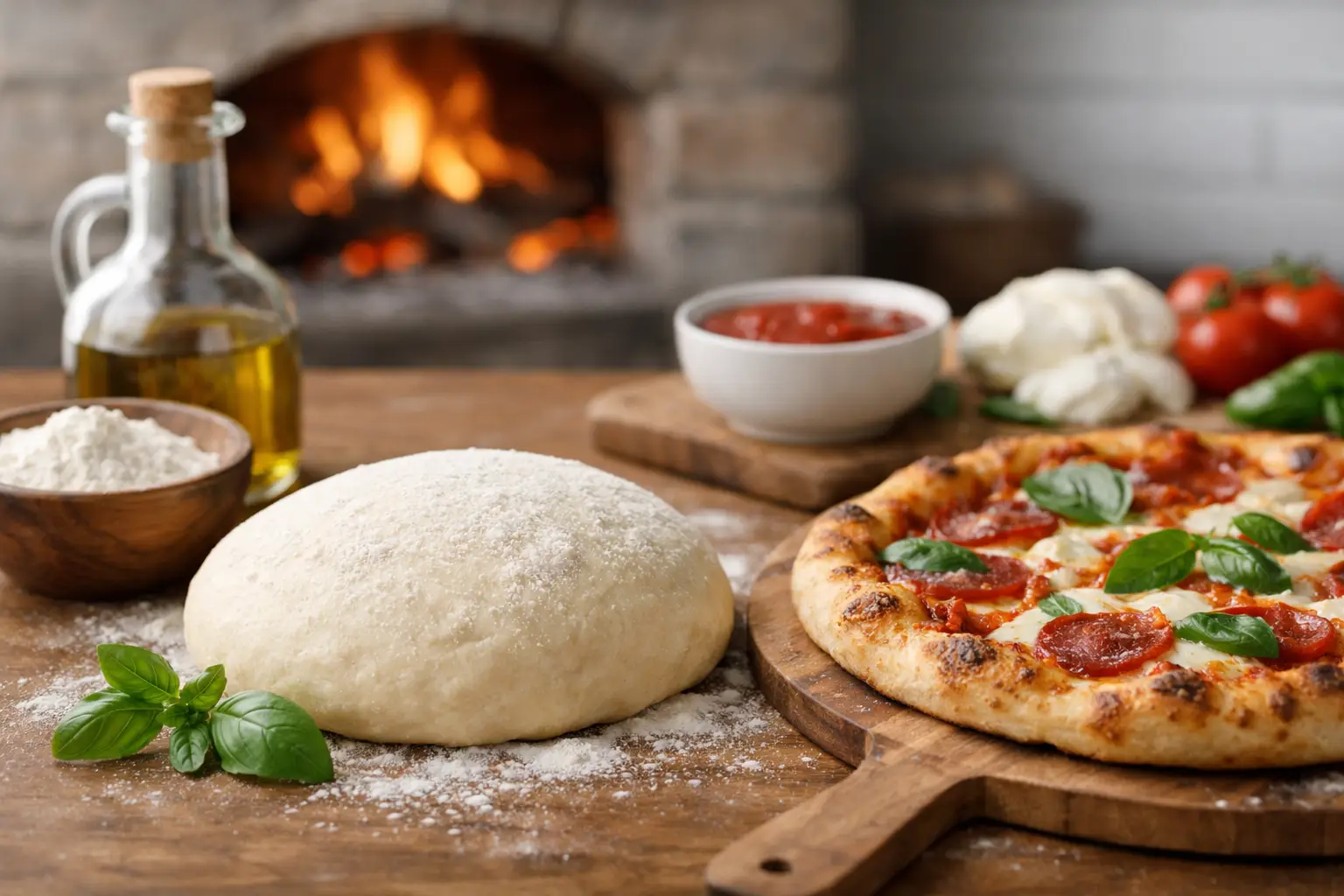
Some pizzas fill you up. Others make you pause after the first bite because the crust actually has flavor, the texture holds up, and every topping sits on something worth eating. That difference usually starts with house made pizza dough.
Fresh dough changes the whole pie. It affects chew, crispness, rise, structure, and flavor in a way frozen shells and pre-made crusts simply do not. If you care about pizza that feels handcrafted instead of stamped out, the dough is not a background detail. It is the foundation.
What house made pizza dough really means
House made pizza dough means the dough is mixed, portioned, and prepared in-house rather than brought in pre-made from a supplier. That sounds simple, but it changes a lot behind the scenes. When a kitchen makes dough daily, it controls the flour blend, hydration, fermentation time, portion size, and final texture.
That control matters because pizza dough is not one-note. A good dough can be crisp at the edge, chewy in the center, and sturdy enough to support sauce, cheese, and toppings without turning dense or limp. When dough is made in-house, those results are shaped intentionally instead of accepted as whatever comes out of a box.
It also signals a certain kind of kitchen mindset. Making dough fresh takes planning, labor, and consistency. You do it because the finished pizza tastes better, not because it is the easiest route.
Why house made pizza dough tastes different
The biggest difference is flavor. Dough made in-house has time to develop. As it rests and ferments, it builds subtle tang, depth, and that lightly yeasty aroma that makes a crust feel alive instead of flat. Even when the toppings are bold, you can still taste the character of the crust underneath.
Texture is the other major shift. Pre-made crust often lands at one extreme or the other – too bready, too cracker-like, or oddly uniform from edge to center. House made dough has more range. It can blister in the oven, brown properly, and give you that mix of crunch and chew people actually remember.
There is also a freshness factor that is hard to fake. Fresh dough responds better in the oven, which helps create a crust that feels lighter and more balanced. That matters whether you are ordering a classic pepperoni pie or something with bigger flavors layered on top.
The role of fermentation in better crust
If you have ever wondered why one pizza crust tastes richer than another even when the ingredient list looks basic, fermentation is usually the answer. Flour, water, yeast, salt, and oil do not seem complicated, but time transforms them.
As dough ferments, it becomes more flavorful and easier to work with. It develops gas bubbles that help create a lighter interior and a better rise around the edge. It also develops structure, which is what lets a slice fold without falling apart or stay crisp without becoming dry.
There is a trade-off here. Longer fermentation usually means better flavor, but it also requires more prep, more cooler space, and tighter timing. That is one reason not every restaurant chooses to make fresh dough daily. It asks more from the kitchen. For places that care about the finished pie, that extra effort is worth it.
Fresh dough daily changes the whole pizza
People often focus on toppings first, which makes sense. Specialty pies, extra cheese, spicy sauces, and creative combinations catch your eye. But toppings can only do so much if the crust under them is forgettable.
House made pizza dough gives the rest of the pizza a better base to work from. Sauce sits differently on fresh dough. Cheese melts into it more naturally. Toppings feel balanced instead of piled on. The crust becomes part of the bite rather than just the handle you eat last.
That is especially important on pizzas with stronger flavor combinations. A pie with buffalo chicken, pickles, pineapple, or a richer meat topping needs a crust that can stand up to all of it. Good dough keeps the pizza grounded. It gives contrast, structure, and enough flavor to hold its own without competing.
House made dough and consistency
One fair question is whether making dough in-house makes a restaurant less consistent. After all, dough is alive. Weather, temperature, humidity, and timing can affect how it behaves. The short answer is yes – it can be more demanding.
But in a kitchen that knows its process, that challenge is part of the craft. Consistency does not come from outsourcing every variable. It comes from paying attention to them. Staff adjust proofing times, dough temperatures, and handling techniques to keep the final pizza where it should be.
That is the kind of consistency people actually want. Not identical in a factory sense, but reliably good. The crust should show care every time, even if each batch has a little personality.
Why it matters in a tavern setting
Pizza tastes different in a place built for people to settle in, order another round, and share a table for a while. In that setting, the food needs to do more than arrive hot. It needs to hold up over a conversation, pair well with drinks, and still feel satisfying from first slice to last.
That is where fresh dough earns its place. A well-made crust supports a casual meal without feeling cheap or rushed. It works with classic bar favorites, but it also gives the menu room to be more interesting. You can keep things traditional or go for a specialty pie and still get the same handcrafted base underneath.
At a neighborhood spot like The Declaration Tavern, house made dough fits the whole experience. It belongs alongside cold beer, a solid bourbon pour, and food that feels a step above standard bar pizza without losing the comfort people come in for.
What to look for in house made pizza dough
Not every fresh dough style is supposed to taste the same, so there is no single correct outcome. Some people want a thinner crust with more crispness. Others want a little more chew and body. What matters is balance.
A good house made crust should have flavor on its own, not just after you drag it through leftover sauce. It should brown well, hold toppings without sagging too much, and give some resistance when you bite into it. The outer edge should feel worth eating, not like packing material.
You can usually tell within a bite or two whether the dough was treated like an ingredient that matters. If the crust tastes fresh, the texture has contrast, and the slice feels built instead of assembled, that is a good sign the kitchen took the dough seriously.
Why people come back for it
People may try a pizza place because of a specialty pie, a tavern atmosphere, or a recommendation from a friend. They come back because the basics are right. House made pizza dough is one of those basics that quietly drives repeat visits.
It makes familiar pizzas better and creative pizzas more believable. It gives the meal a sense of care without turning dinner into a lecture on craftsmanship. Most guests are not asking about hydration percentages or fermentation schedules. They just know when a crust tastes fresh and when it does not.
That kind of quality sticks with people. It turns pizza from a default option into a place you actually look forward to ordering from again.
When the dough is made in-house, the pizza starts with more flavor, more texture, and more intention. And when that happens, every slice feels like it came from a kitchen that wants to be your regular spot, not just your backup plan.
Leave a Reply